ACM-Lab Access

Enter the AI Composite Lab

The research portfolio is public. Sign in only if you need private collaboration tools.

ACM

Viewer mode can browse the site and practice the game, but cannot publish, chat, like, verify, or enter rankings.

ACM-Lab Research Team

昆山狄邦华曜学校 · Student Research Programme

ACM-Lab

Advanced Composite
Materials Laboratory

Structural composites & environmental filtration — researched through 3D-printed specimens, bio-coating experiments, and controlled load testing.

↓ Scroll to enter the lab

We build composite material systems, test them to failure, and record the data.

ACM-Lab studies how lattice geometry, bio-coating composition, and fabrication parameters influence structural performance and environmental filtration — documented from hypothesis to measured outcome across two integrated tracks.

4 Specimen variants fabricatedUniform/gradient × coated/uncoated
3 Coating layers under evaluationMass gain · adhesion · cracking
2% w/v Chitosan concentrationActive protocol variable
2 Integrated research tracksStructural + Environmental

Track A — Structural

Composite Material Testing

3D-printed PLA lattices in uniform and gradient geometries, loaded to failure under standardised conditions. We measure how geometry controls stiffness, failure mode, and strength-to-weight ratio.

FDM fabrication Compressive loading Failure mode mapping

Track B — Environmental

Bio-Composite Filtration

Chitosan biopolymer at 2% w/v applied across three coating cycles to PLA substrates. Planned evaluation: dye removal rate, flow resistance, and reuse stability in gyroid-geometry cartridges at 40% infill.

Bio-polymer coating Mass-gain measurement Gyroid geometry

Structure

Lattice Geometry

3D-printed PLA lattices tested for load distribution, failure mode, and strength-to-weight performance — comparing uniform and gradient geometries under standardised loading.

Gradient vs. uniform · Failure mode mapping · Load testing

Interface

Bio-Composite Coating

Chitosan biopolymer at 2% w/v applied across three coating layers — evaluated for mass gain, water resistance, and adhesion quality under structural loading.

2% w/v · 3-layer protocol · Mass gain per layer

System

Filtration Prototype

Composite adsorbent designed for gyroid-geometry cartridges at 40% infill — planned evaluation of dye removal rate, flow performance, and reuse stability in future trials.

Planned: dye removal · flow rate · reuse stability · Gyroid 40% infill

Controlled Variables Physical Prototypes Load Testing Failure Records
Research Commons

Team

ACM-Lab operates as a student research commons where fabrication, material preparation, testing, documentation, and publication are divided into clear responsibilities.

11 members
5 function areas
3 research tracks
1 faculty advisor
Leadership & Research Direction

Research strategy, team coordination, experimental planning, and project oversight.

Aditya Vishwakarma

Aditya Vishwakarma

Faculty Advisor

Guides experimental safety, research direction, and experimental standards. Reviews research outcomes and provides mentorship to the team.

Andy (Yan Gu)

Andy Yan Gu

President & Chief Research Lead

Oversees research strategy, experimental planning, team workflow, and project documentation. Maintains website as a public-facing research archive.

Thomas (Haoyang Pan)

Thomas Haoyang Pan

Vice President

Manages team coordination, tracks experiment progress, organises meetings and milestone records, and supports material preparation documentation.

3D Printing / Fabrication

3D modeling, print operations, prototype assembly, and sample fabrication for structural and filtration prototypes.

Ree (Yuqiao Ren)

Ree Yuqiao Ren

Head of Experiment

Leads 3D modeling (Shapr3D) and external print coordination. Translates lattice geometries into filtration and structural prototypes. Supports solution preparation and lab work.

Hunter (Heng Wang)

Hunter Heng Wang

Prototype Development

Turns CAD designs into physical samples. Supports 3D printed prototype fabrication, structure assembly, and pre-experiment sample preparation.

Dave (Yi Wu)

Dave Yi Wu

3D Print Operations

Operates 3D printers, configures print parameters, and oversees print quality for lattice structures, truss bridges, and filtration prototypes.

Materials & Coating

Chitosan composite synthesis, coating application protocols, solution preparation, and filtration system evaluation.

Yvonne (Yuwei Qiu)

Yvonne Yuwei Qiu

Research Director

Leads chitosan composite experimental design, develops solution synthesis protocols, oversees data logging, and troubleshoots formulation inconsistencies.

Levin (Lewen Zuo)

Levin Lewen Zuo

Filtration Research

Works on 3D printed filtration system design, filter cartridge testing, flow rate measurement, and filtration system prototype evaluation.

Testing & Failure Documentation

Mechanical load testing, failure mode observation, data collection, and experimental performance analysis.

Eric (Chengfei Zhang)

Eric Chengfei Zhang

Mechanical Testing

Runs truss bridge load-bearing experiments, observes and records failure modes, and measures load-at-failure and strength-to-weight data.

Denny (Ziyuan Ding)

Denny Ziyuan Ding

Data Analysis

Organises experimental data, creates graphs, and supports comparison of load capacity, adsorption indicators, flow rate, and material cost data.

Data / Publication / Operations

Research documentation, experiment logs, outreach materials, project budgeting, and cost-performance evaluation.

Joy (Junyi Xu)

Joy Junyi Xu

Documentation & Outreach

Maintains experiment logs, writes research reports, prepares presentation copy and poster content, and produces team introduction materials.

Richie (Zeyu Li)

Richie Zeyu Li

Economics & Operations

Manages experimental cost control, material budgeting, and cost-performance analysis. Handles project resource management and feasibility evaluation.

Research Workflow

Each experiment follows this sequence from initial question to documented output.

01 Research question
02 Design
03 Fabrication
04 Coating / Material prep
05 Testing
06 Failure documentation
07 Revision
08 Publication draft

How ACM-Lab keeps research organised

Six systems ensure every experiment produces a usable, traceable record.

Shared protocols

Standardised preparation steps shared across teams to ensure consistent experimental conditions between runs.

Experiment logs

Timestamped records of each experiment: variables controlled, observations made, and outcomes noted.

Failure records

Structured entries documenting what failed, the likely cause, what was isolated, and what was adjusted.

Photo evidence

Lab photos attached to experiment entries as visual evidence of fabrication and testing steps.

Planned measurements

Metrics identified as evaluation targets for future test rounds, labelled as pending until measured.

Publication drafts

Research summaries and poster drafts prepared for internal review before any external sharing.

Mission

Research Programme · ACM-Lab · Dipont Huayao School Kunshan

Research Program

ACM-Lab studies how material composition, lattice geometry, and fabrication parameters affect structural performance and environmental filtration behavior — documented from hypothesis through controlled testing across two integrated research tracks.

Track A Prototype testing

Structural Materials

How do lattice geometry, gradient distribution, and bio-composite coating affect load transfer efficiency, failure mode, and strength-to-weight ratio?

  • 3D-printed PLA lattice and truss specimens
  • Uniform and gradient lattice geometries
  • Chitosan bio-composite surface treatment (2% w/v)
  • Compressive load-to-failure testing
  • Strength-to-weight ratio and stiffness measurement
  • Failure mode mapping — node vs. member
Module 01 Module 02
Track B Protocol design

Environmental Materials

Which adsorbent formulation and 3D-printed cartridge geometry combination achieves optimal dye removal, flow throughput, and reuse stability?

  • Sustainable alginate–carbon composite adsorbent
  • Chitosan as bio-based binder and coating additive
  • 3D-printed gyroid filtration channel geometry
  • Dye-removal and flow evaluation (planned testing)
  • Removal efficiency as a planned measurement
  • Flow rate and clogging resistance (planned metric)
Module 03 Module 04

Research Design

Logic Matrix

Material System
Engineering Method
Experimental Variables
Measured Outcomes
Why It Matters
Status
Track A
Structural
PLA filament · uniform & gradient lattice · chitosan 2% w/v
FDM fabrication · compressive load-to-failure testing
Lattice density · truss angle · gradient distribution · coating layers
Failure load · specimen mass · stiffness (N/mm) · failure location
Informs lightweight structure design — aerospace, architecture, biomedical
Prototype testing
Track B
Environmental
Alginate–carbon composite beads · chitosan additive · PLA gyroid cartridge
Ionic gelation · spectrophotometric absorbance · planned flow-through evaluation
Alginate:carbon ratio · infill % · contact time · reuse cycle count
Absorbance at 664 nm · bead mass stability · flow rate (planned measurement)
Scalable bio-derived adsorbent for decentralised water treatment
Protocol design

Research Process

Variable → Outcome Loop

01

Input Variables

Lattice density · coating condition · channel geometry

02

Fabrication

3D printing · dip-coat protocol · ionic gelation

03

Test Method

Compression loading · adsorption test · filtration run

04

Measured Outcome

Failure mode · absorbance reading · flow rate

05

Design Iteration

Geometry or formulation adjustment based on results

Lab Evidence

Documentation & Specimen Record

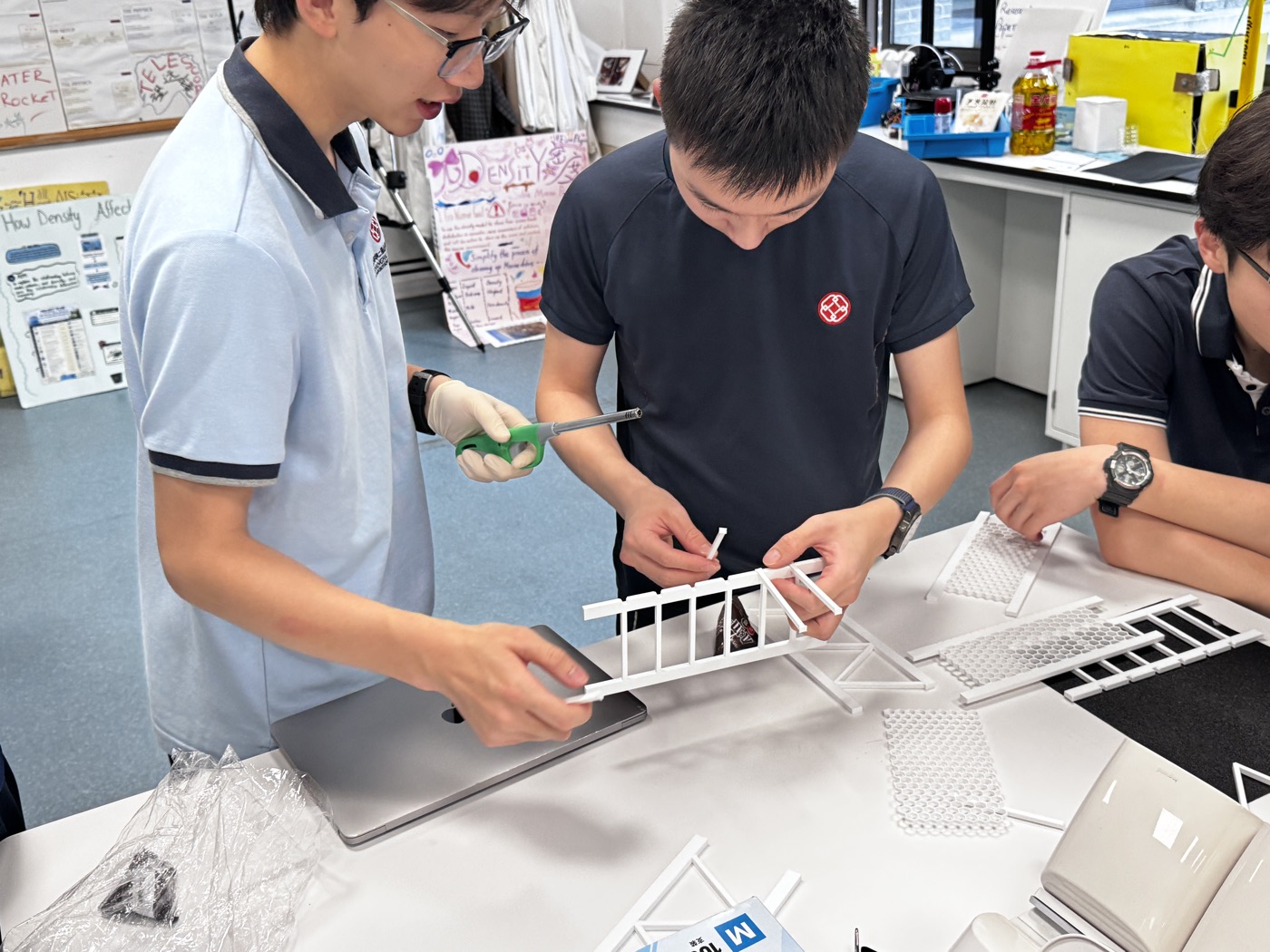
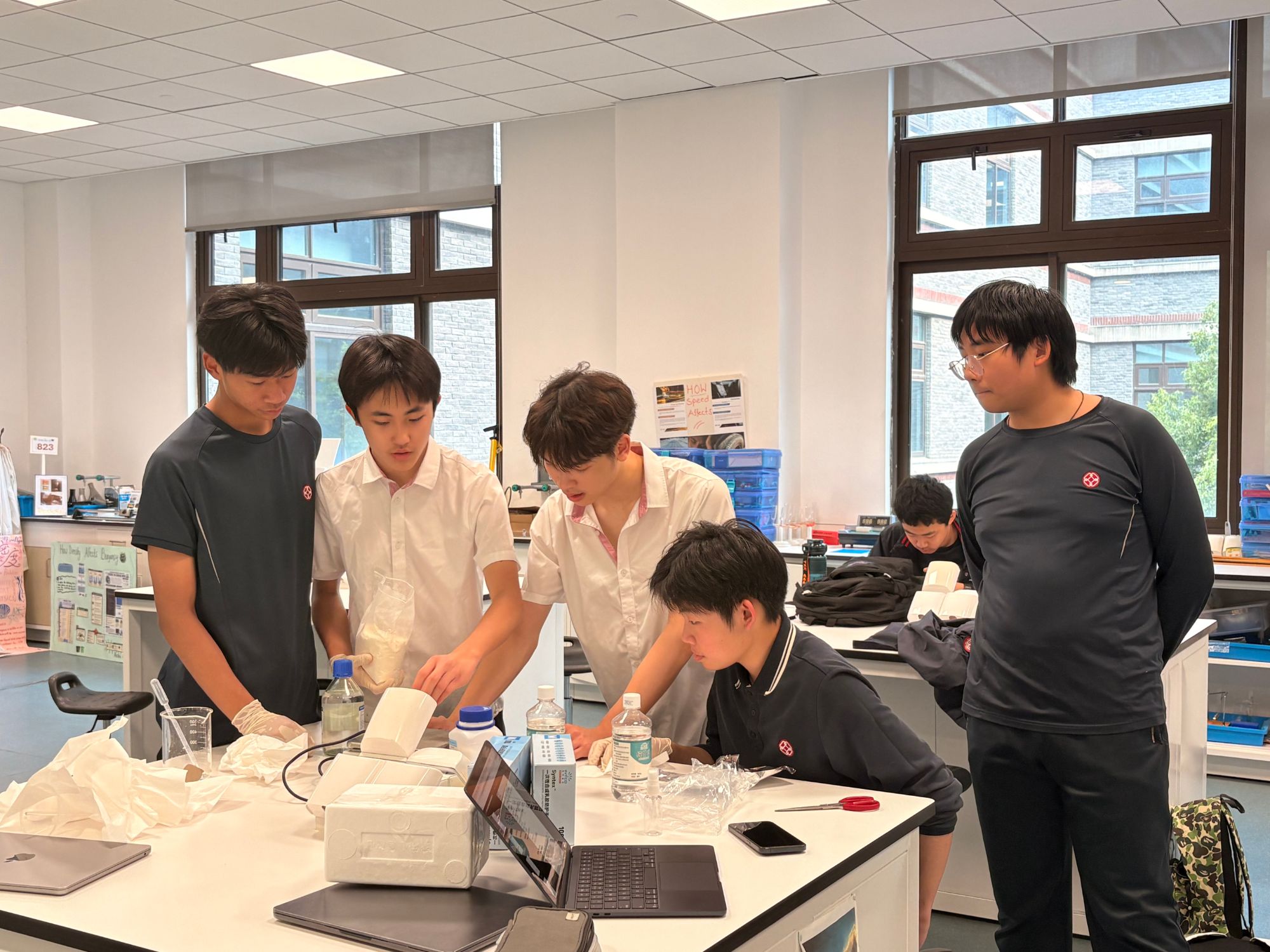
Team assembling 3D-printed lattice truss bridge
Phase A · Fabrication

Bridge Assembly

Assembling PLA lattice truss bridge specimens — aligning members and preparing for load testing.

PLALatticeAssembly
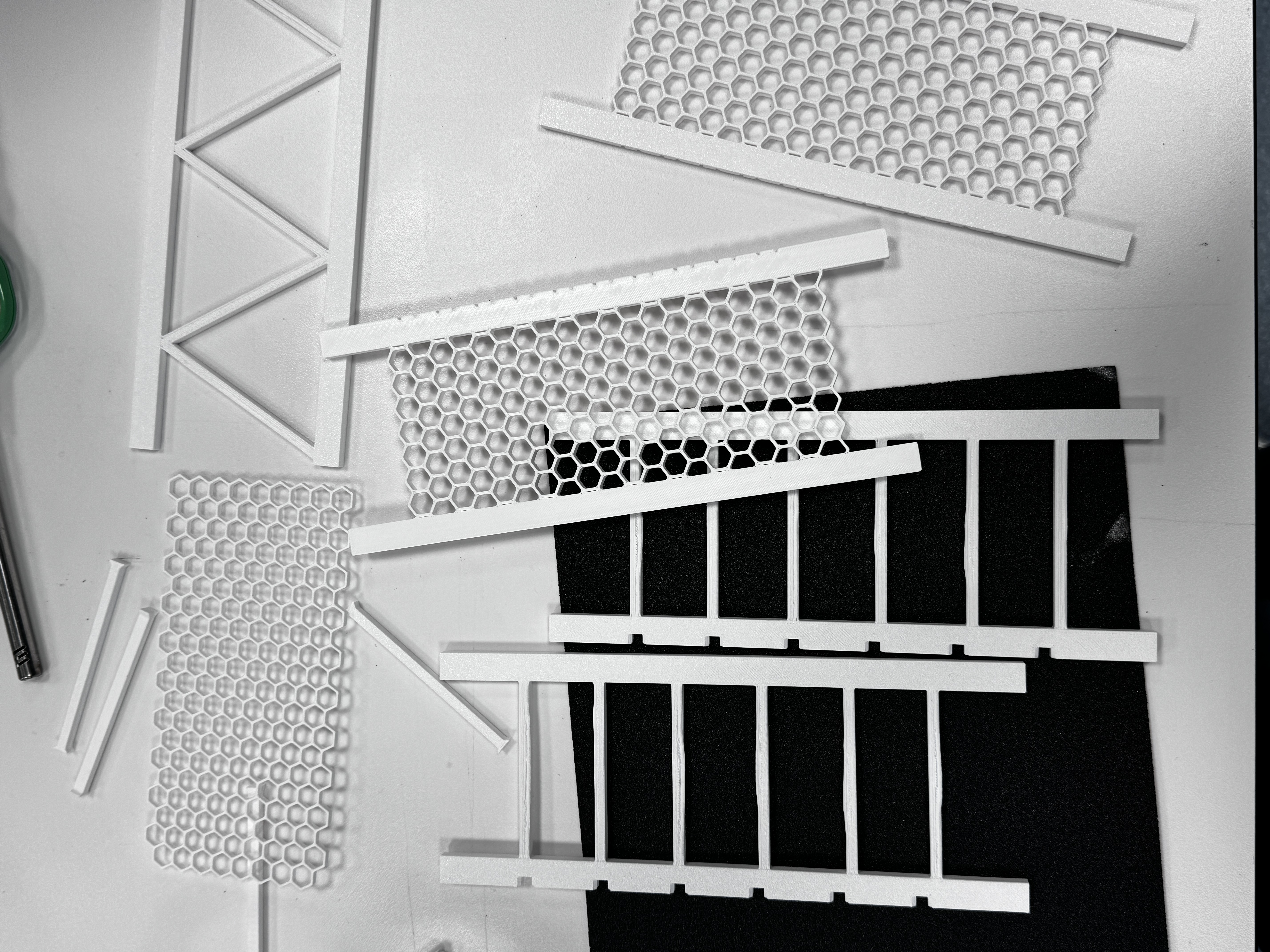
3D-printed lattice bridge prototype specimens
Phase A · Specimens

Lattice Truss Variants

Four variants — A1 uniform, A2 uniform+coated, A3 gradient, A4 gradient+coated — for load-path comparison.

GradientUniform4 variants
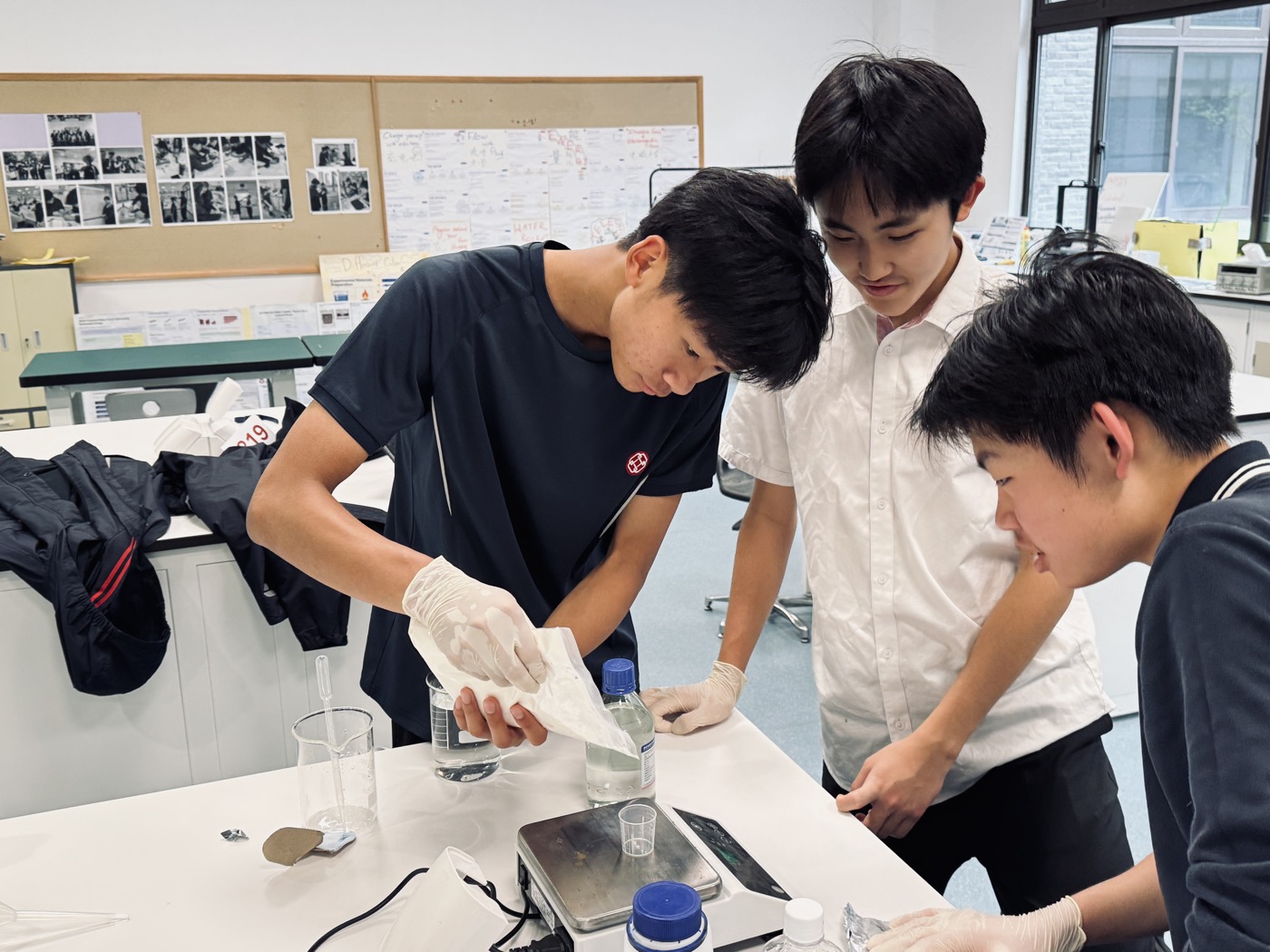
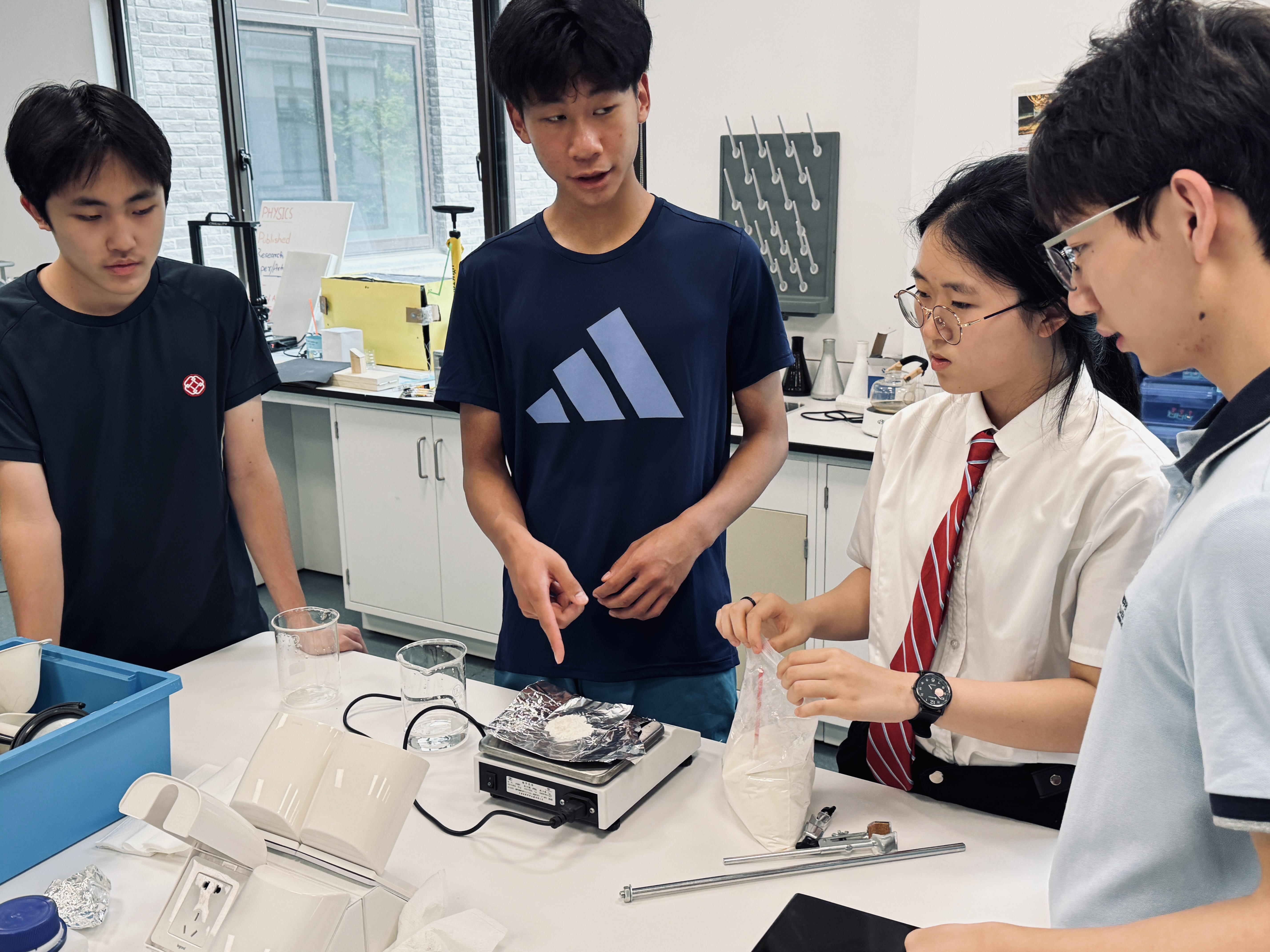
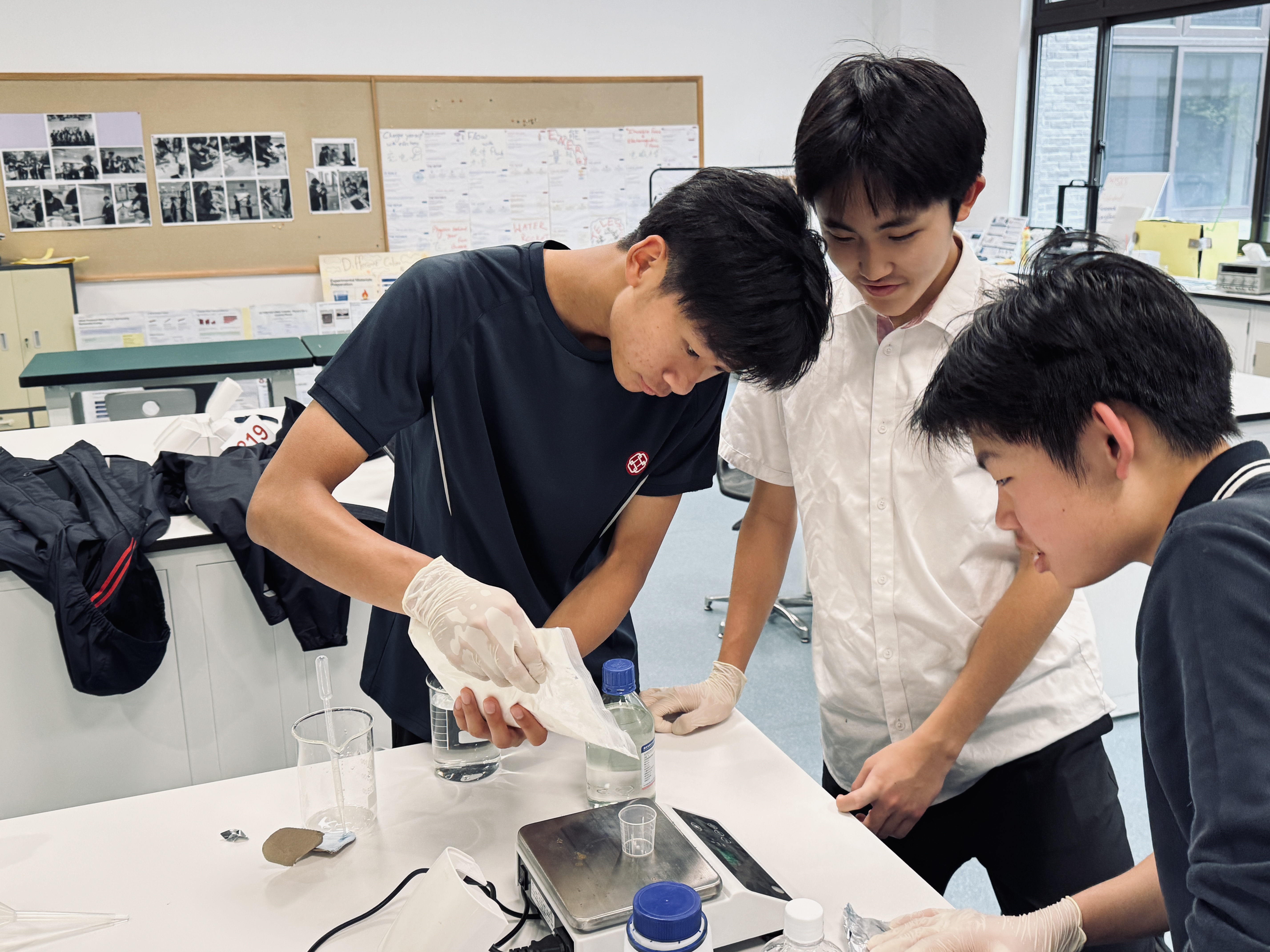
Students preparing chitosan biomaterial
Phase B · Material Prep

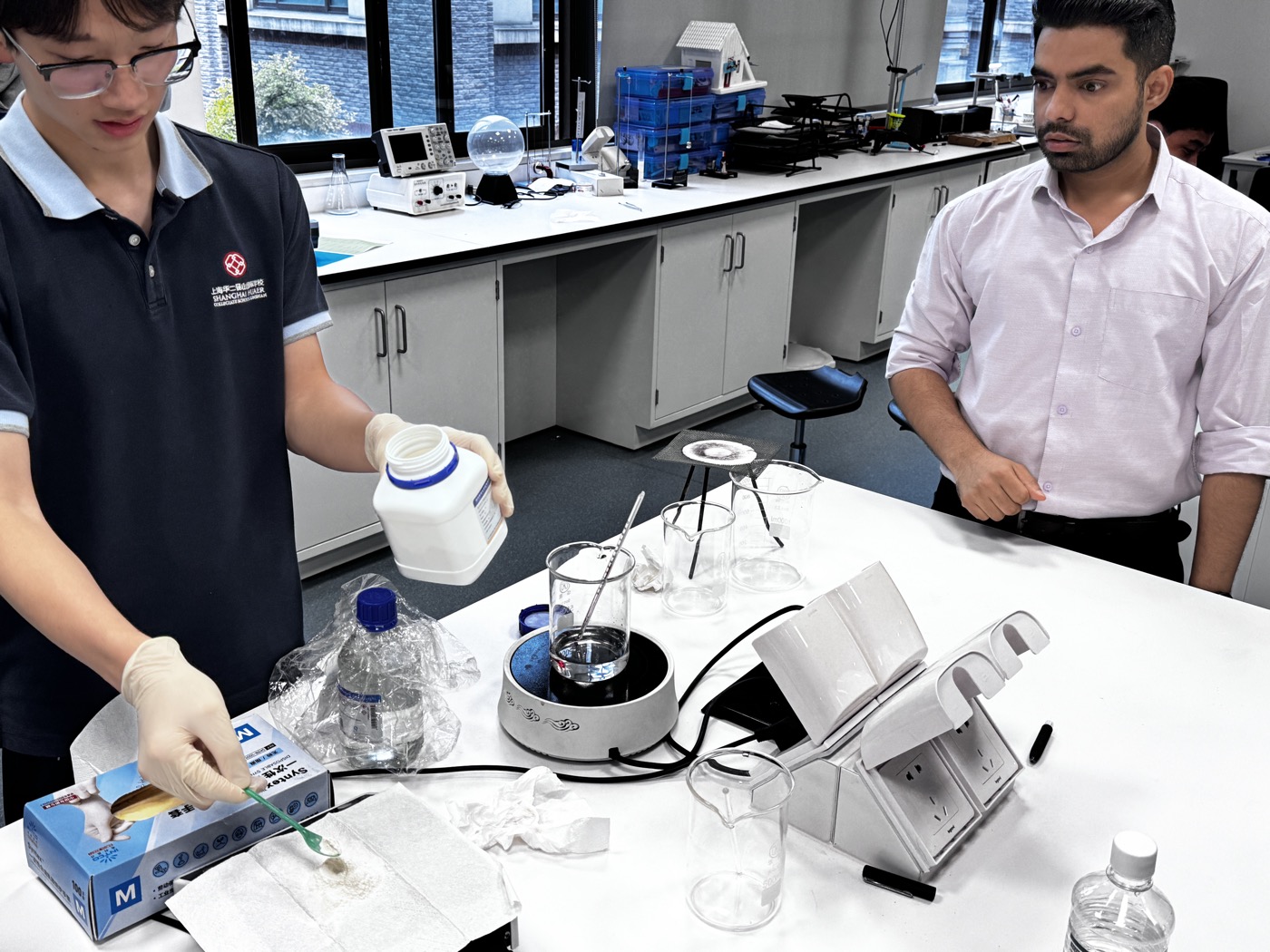
Chitosan Preparation

Weighing and dissolving chitosan at 2% w/v in 1% acetic acid solution before dip-coating.

Chitosan2% w/vWeighing
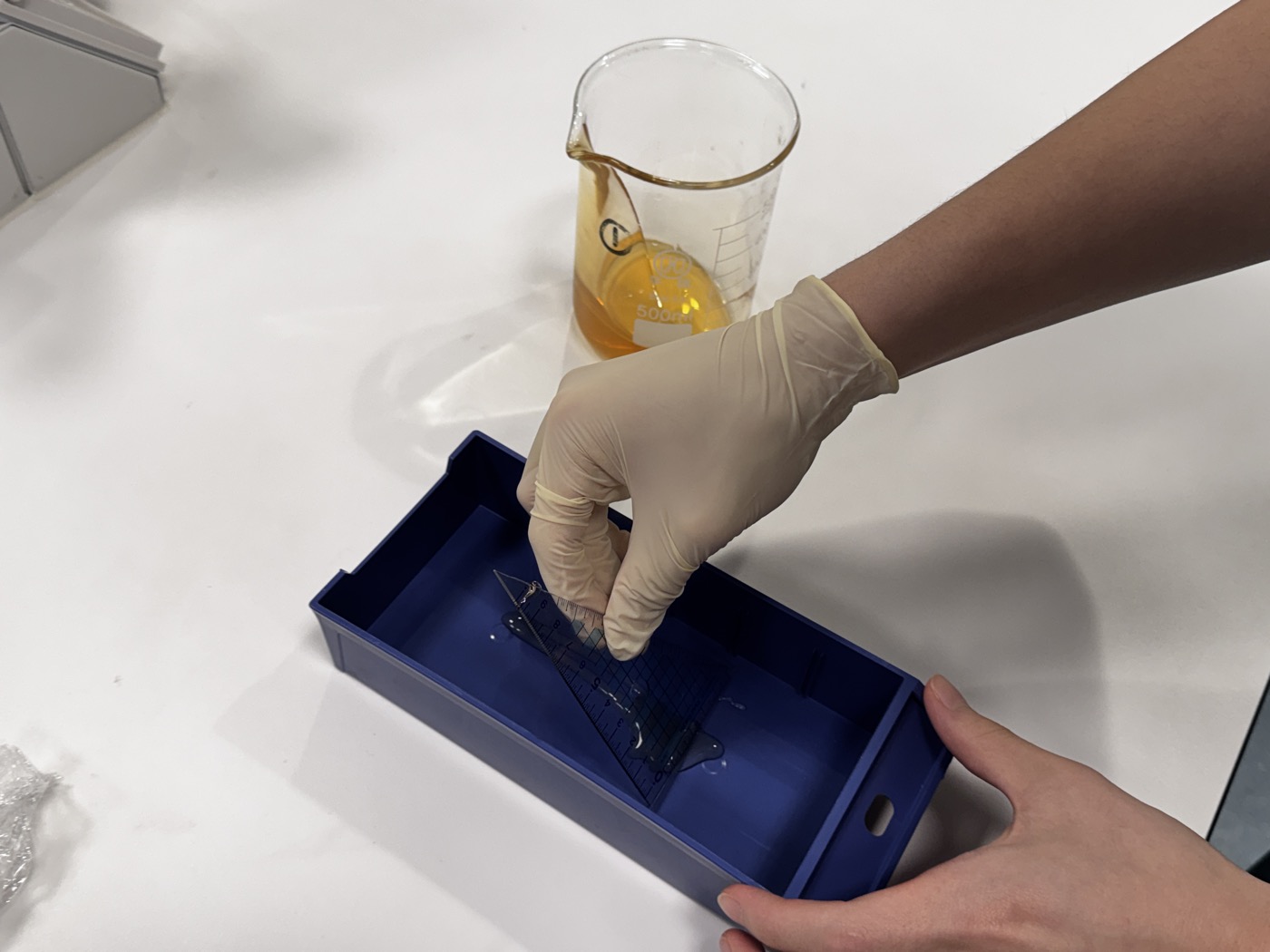
Applying chitosan coating to 3D-printed lattice
Phase B · Coating

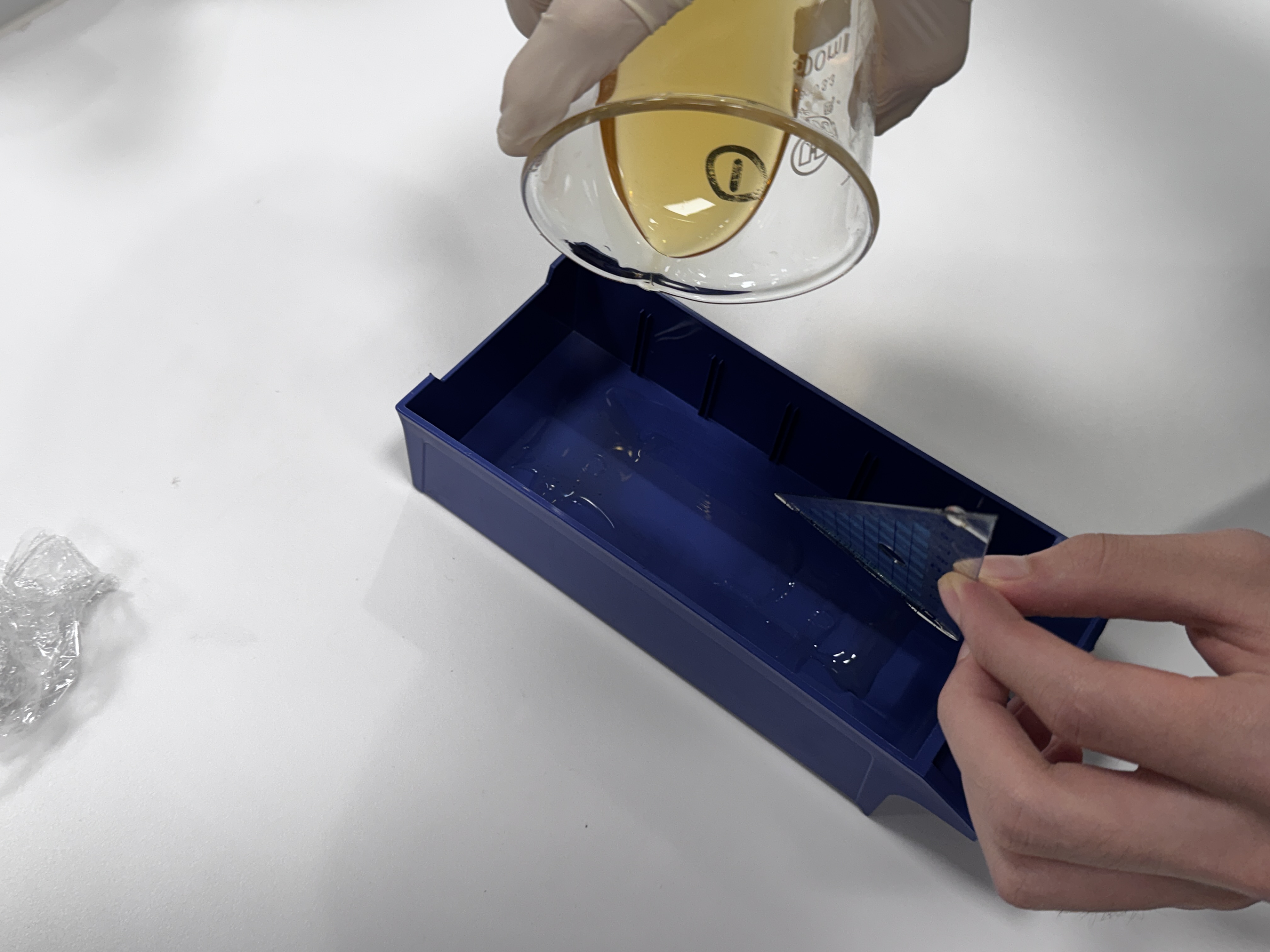
Coating Application

Dip-coating PLA lattice with chitosan solution — 1–3 layers, mass gain recorded per cycle.

Dip-coatLayers 1–3Mass gain
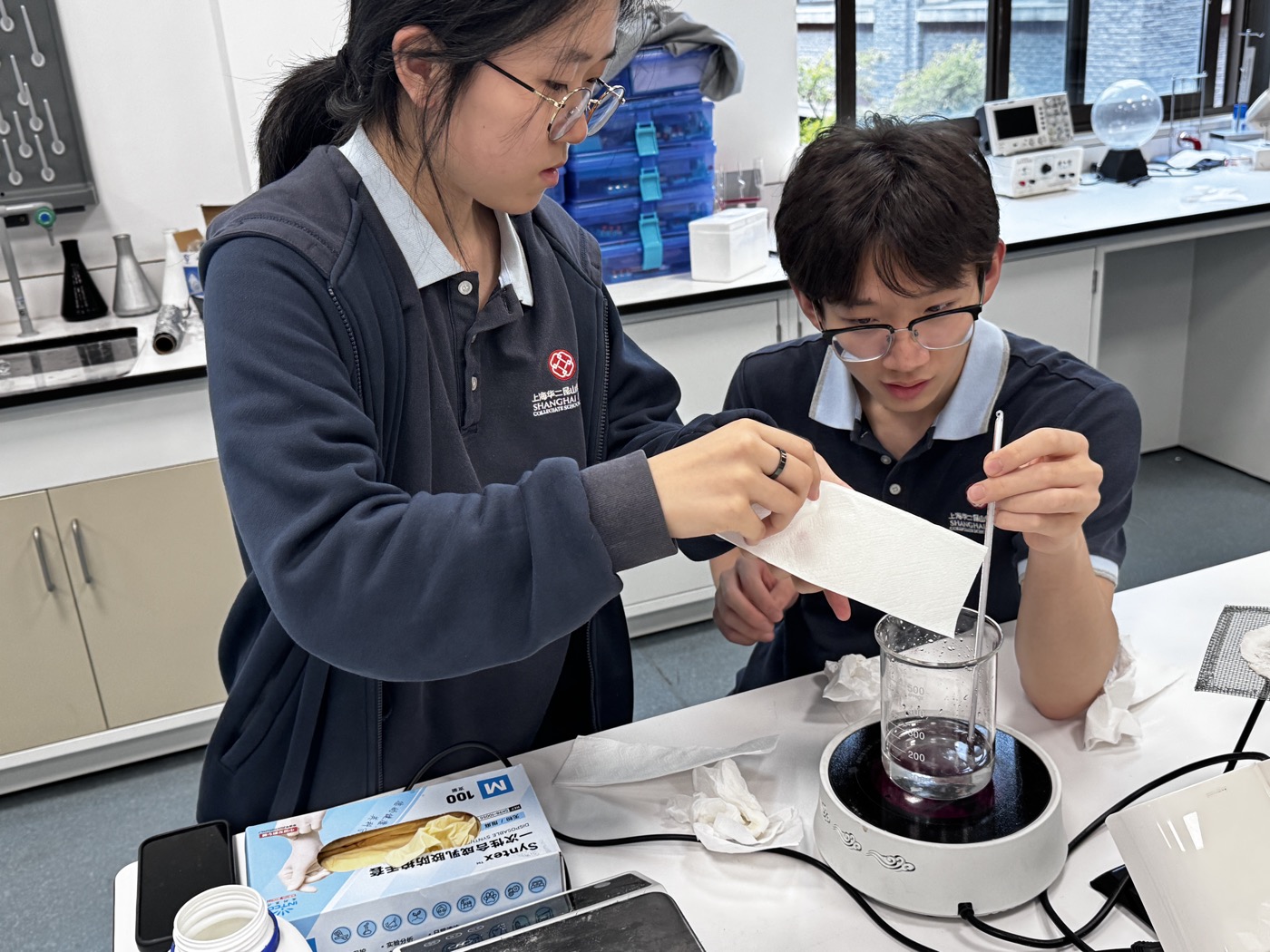
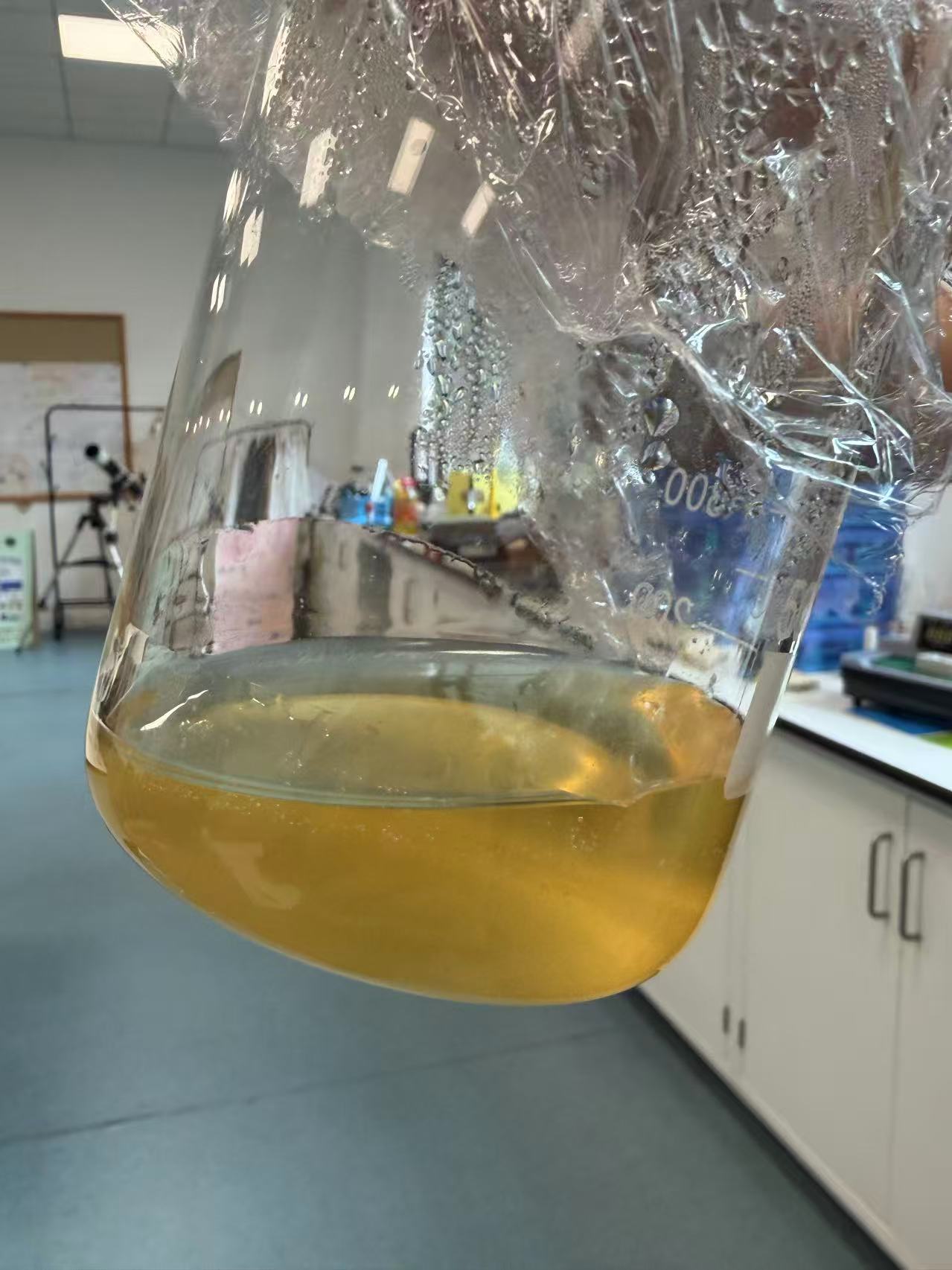
Solution preparation with magnetic stirrer
Phase B · Solution Prep

Solution Preparation

Magnetic stirring to dissolve chitosan — controlled for consistent coating viscosity across specimens.

StirrerViscosityConsistency
Faculty mentor supervision in materials lab
Mentor Supervision

Lab Supervision

Research conducted under faculty mentor guidance in a professional materials laboratory setting.

MentorshipLab setting
Team configuring compressive load-test setup for lattice bridge specimens
Phase B · Testing

Load Testing Setup

Compressive load applied to PLA lattice specimens — recording peak load, deflection, and failure mode for coated vs. uncoated comparison.

CompressiveLoad-to-failureCoated vs. uncoated
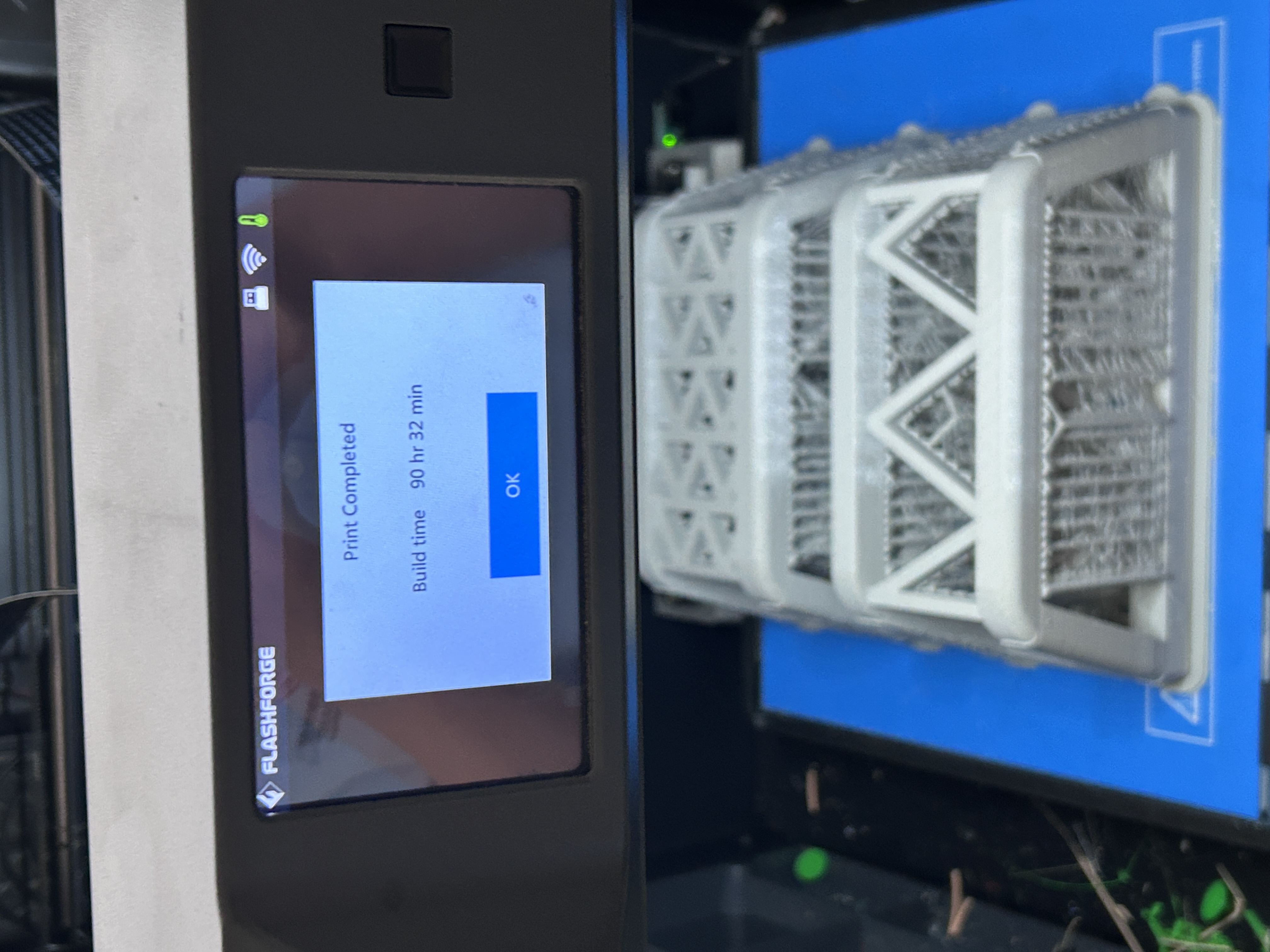
Flashforge 3D printer completing 90-hour lattice filtration cartridge print
Phase B · Filtration

Filtration Prototype

3D-printed filtration cartridge — 90+ hr build on Flashforge, chitosan-coated lattice insert for MB dye adsorption evaluation.

CartridgeAdsorptionDye removal

Research Modules

Four-Module Structure

01Track A · Structural

3D-Printed Lattice Bridge — Geometry & Structural Performance

How do lattice density, truss geometry, and gradient distribution affect load transfer, failure mode, and strength-to-weight ratio?

PLA filamentGradient latticeCompressive loadingFailure mapping
Prototype & Physical Testing
02Track A · Structural

Chitosan Bio-Coating — Surface Modification & Durability

Can a chitosan bio-coating improve surface durability and water resistance without significantly increasing mass or weakening the structure?

Chitosan 2% w/vDip-coatingMass gainAdhesion quality
Coating & Adhesion Testing
03Track B · Environmental

Composite Adsorbent — Formulation & Adsorption Testing

Which alginate–carbon adsorbent formulation achieves the best MB dye removal while remaining structurally stable over multiple reuse cycles?

Alginate–carbonMB dye664 nm absorbanceReuse cycles
Formulation Screening
04Track B · Environmental

3D-Printed Filtration System — Integration, Flow & Validation

Which cartridge geometry and adsorbent combination best balances removal efficiency, flow rate, and structural stability?

PLA gyroid20–60% infillFlow rateDye removal (planned)
Prototype Design & Planned Evaluation

Current Phase

Status & Planned Work

Completed / In Progress

  • Specimen fabrication — PLA lattice bridge variants (A1–A4)
  • Chitosan bio-coating protocol established
  • Mass-gain measurement across coating layers 1–3
  • Prototype assembly and pre-test documentation
  • Adsorbent formulation screening in progress

Under Evaluation

  • Compressive load-to-failure testing (Track A)
  • Failure mode classification — node vs. member
  • Coating adhesion quality and crack pattern
  • Methylene blue adsorption protocol testing (Track B)

Planned Next Phase

  • Filtration cartridge prototype printing
  • Flow-through dye removal evaluation
  • Reuse cycle stability measurement
  • Cross-track comparison — coating vs. adsorbent
  • Failure log and iteration documentation

No filtration efficiency, dye removal rate, or structural improvement is claimed without measured experimental evidence. All forward-looking items are planned evaluation.

Design Print Coat / Formulate Test Analyse Document Failure Improve

Experiments Log · ACM-Lab · Dipont Huayao School Kunshan

Experiments Log

A structured record of every fabrication, coating, and testing session — each entry documents controlled variables, observed outcomes, and honest data status at each phase of the research process.

8Entries
2Completed
2In Progress
4Planned
Track A · Structural
Track B · Environmental

Experimental Timeline · 8 Entries · Mar 2026 — Mar 2027

A chronological record of fabrication, coating, testing, and filtration experiments across two research tracks.

E-01 Track A+B Completed

Research Question & Experimental Framework

Objective
Define research questions, identify controlled variables, and establish experimental groups for both research tracks.
Materials
Research literature, CAD planning notes, experimental group design document
Controlled Variables
Lattice geometry type, coating condition, adsorbent composition — variables defined for A1–A4 and B1–B4 experimental groups
Procedure Summary
Literature review conducted; research questions formulated; 4-group matrix designed for structural (A1–A4) and filtration (B1–B4) programmes
Observation
Research framework documented. Four experimental groups defined for each track. Observation recorded.
Data Status
Framework — documented
Next Adjustment
Move from research planning to printable lattice bridge CAD design and specimen fabrication
CAD planningLattice densitySpan lengthControl group
ACM-Lab team planning experimental framework in laboratory

Research framework session — team defining experimental groups and controlled variables

E-02 Track A Completed

3D-Printed Lattice Bridge Fabrication

Objective
Design and fabricate four bridge specimen variants with controlled lattice geometry for load-bearing comparison.
Materials
PLA filament (1.75 mm), FDM 3D printer, digital caliper, specimen log sheet
Controlled Variables
Print temperature, layer height, print speed, bridge span length
Procedure Summary
CAD-designed A1 (uniform, uncoated), A2 (uniform, coated), A3 (gradient, uncoated), A4 (gradient, coated). Printed all variants. Recorded mass and geometry per variant. Logged print quality and defect locations.
Observation
4 specimen sets fabricated. Mass-geometry consistency recorded per variant. Print quality documented with visual inspection. Observation recorded.
Data Status
Fabrication — observation recorded
Next Adjustment
Prepare chitosan coating solution and apply to A2 and A4 specimens before load testing
3D printingSpecimen massPrint quality4 variants
PLA lattice bridge specimens assembled and compared in lab

Prototype evidence — PLA lattice bridge variants assembled in lab

E-03 Coating In Progress

Chitosan Bio-Coating Preparation & Adhesion Trial

Objective
Prepare chitosan-based coating solution and establish a stable adhesion protocol — recording mass gain, surface quality, and cracking pattern per layer.
Materials
Chitosan powder (2% w/v), 1% acetic acid solution, magnetic stirrer, digital scale, dip-coating tray
Controlled Variables
Chitosan concentration, acetic acid concentration, stirring duration, coating layer count (1–3), drying time between layers
Procedure Summary
Weigh chitosan → dissolve in 1% acetic acid → stir until homogeneous → dip-coat specimens for 1, 2, and 3 layers → weigh after each layer → dry at room temperature → photograph surface quality
Observation
Mass gain per coating layer recorded. Surface quality and uniformity under visual inspection. Consistency across specimens currently under evaluation.
Data Status
Protocol under evaluation
Next Adjustment
Standardise drying conditions and layer interval to improve inter-specimen consistency before load testing
Chitosan 2% w/vCoating massSurface stability1–3 layers
Team weighing chitosan powder and preparing solution

Lab evidence — chitosan powder weighing and solution preparation (2% w/v, acetic acid solvent)

E-04 Track A In Progress

Load Testing & Coated vs Uncoated Comparison

Objective
Compare failure load, failure mode, and strength-to-weight ratio between coated and uncoated specimens under standardised compressive load.
Materials
A1–A4 bridge specimens, compression test setup, load cell, test jig, mass scale
Controlled Variables
Load application rate, specimen span length, test jig geometry, bridge orientation during loading
Procedure Summary
Position specimen in test jig → apply incremental load until structural failure → record maximum load, failure location (node vs. member), mass → calculate strength-to-weight ratio → photograph failure state
Observation
Load testing setup established. Preliminary trials in progress. Failure mode documentation ongoing. Final comparison data collection under way.
Data Status
Measurement pending — load data in progress
Next Adjustment
Based on observed failure modes, adjust lattice node geometry and coating layer count for the next print iteration
Maximum loadFailure modeStrength-to-weightNode vs member
Chitosan coating applied to lattice bridge specimen

Coating protocol — chitosan solution applied to specimens before load comparison testing

E-05 Track B Planned

Composite Adsorbent Formulation Screening

Objective
Screen alginate–carbon composite bead formulations for dye adsorption behavior, structural stability, and reusability across multiple contact cycles.
Materials
Sodium alginate, activated carbon, chitosan binder, calcium chloride (crosslinker), methylene blue (MB) dye solution, spectrophotometer
Controlled Variables
Alginate:carbon ratio, bead mass, contact time, initial dye concentration, solution volume
Procedure Summary
Prepare bead formulations at 3 composition ratios → introduce to standardised MB solution → measure absorbance at 664 nm after fixed contact time → compare across formulations → assess bead integrity after multiple cycles
Observation
Planned — spectrophotometric observation to be recorded after formulation trials are conducted
Data Status
Planned measurement — spectrophotometric data pending
Next Adjustment
Select best-performing formulation for integration into the printed filtration cartridge
Alginate–carbon664 nm absorbanceMB dyeReuse cycles
Team preparing dye solution for adsorbent screening

Lab preparation — MB dye solution and adsorbent bead formulation work

E-06 Filtration Planned

3D-Printed Filtration Cartridge Prototype

Objective
Design and print a gyroid-geometry filtration cartridge that controls flow path, layer spacing, and adsorbent packing for water treatment evaluation.
Materials
PLA filament, FDM printer, adsorbent beads from Entry 05, digital caliper, flow measurement setup
Controlled Variables
Infill pattern (gyroid), infill density (20–60%), cartridge channel geometry, adsorbent packing density
Procedure Summary
Model cartridge geometry variants in CAD → print at controlled infill settings → pack with adsorbent beads → assess structural integrity and preliminary flow-through characteristics
Observation
Planned — flow behavior and cartridge integrity to be recorded after printing and initial water-contact evaluation
Data Status
Prototype design stage — printing and evaluation pending
Next Adjustment
Compare cartridge geometry variants using identical adsorbent batch and water sample composition
Gyroid geometry20–60% infillFlow pathAdsorbent packing
3D printer completing lattice specimen print

3D printing completed — 90 hr 32 min build time for lattice geometry prototype

E-07 Filtration Planned

Dye Filtration Performance Evaluation

Objective
Evaluate dye removal behavior and flow rate across printed cartridge geometry variants using controlled water samples and repeated trials.
Materials
Filtration cartridges from Entry 06, MB dye solutions (standardised initial concentration), spectrophotometer, volumetric collection vessels
Controlled Variables
Initial dye concentration, contact time, flow rate, adsorbent batch, trial count per geometry variant
Procedure Summary
Pass standardised dye solutions through each cartridge variant → collect effluent at fixed time intervals → measure absorbance at 664 nm → compare across geometry variants and reuse cycles
Observation
Planned — filtration observations and effluent absorbance data to be recorded after testing is conducted
Data Status
Planned measurement — absorbance readings and removal data pending
Next Adjustment
Identify best-performing cartridge geometry based on dye uptake-to-cost balance; advance to reuse cycle testing
664 nm absorbanceFlow rateContact timeReuse cycles
Student preparing dye filtration setup with stirrer

Filtration prep — dye solution and flow-through setup for performance evaluation

E-08 Track A+B Planned

Final Analysis & Research Portfolio

Objective
Compile cross-track experimental results, failure records, and design iterations into a comparative analysis and publishable research portfolio.
Materials
All experimental datasets from Entries 01–07, failure log records, cross-track comparison template
Controlled Variables
Not applicable — synthesis and documentation stage; standardised reporting format applied across all entries
Procedure Summary
Compile datasets from all entries → generate cross-track comparison tables → classify failure modes by type and cause → write integrated analysis → prepare portfolio and presentation materials
Observation
Planned — final analysis dependent on completion of Entries 03–07. Interim observations from Entries 01–02 already recorded.
Data Status
Pending — results documentation not yet available
Next Adjustment
Prepare research summary for publication, presentation, and application portfolio
Cross-trackFailure classificationPortfolioDocumentation
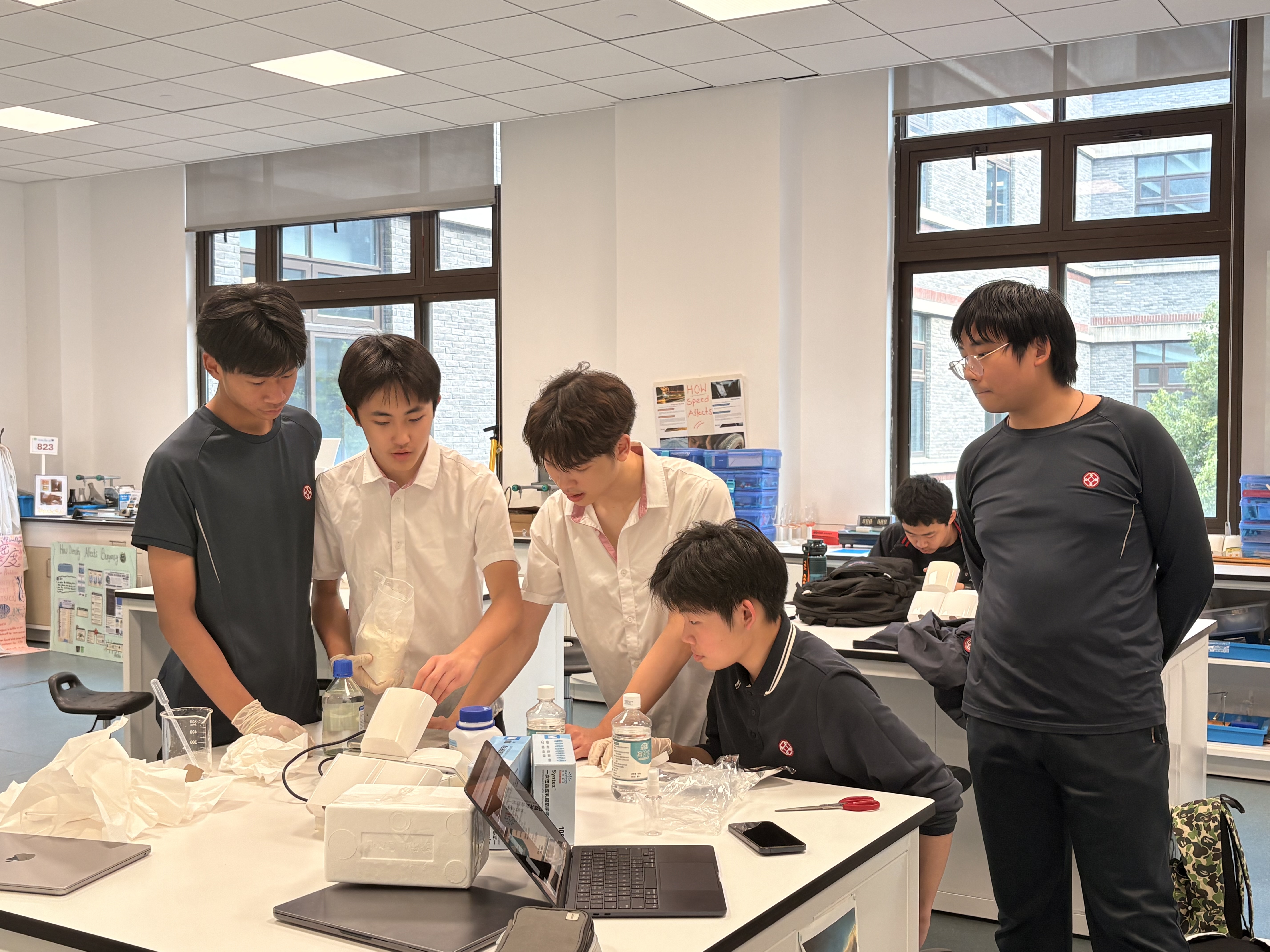
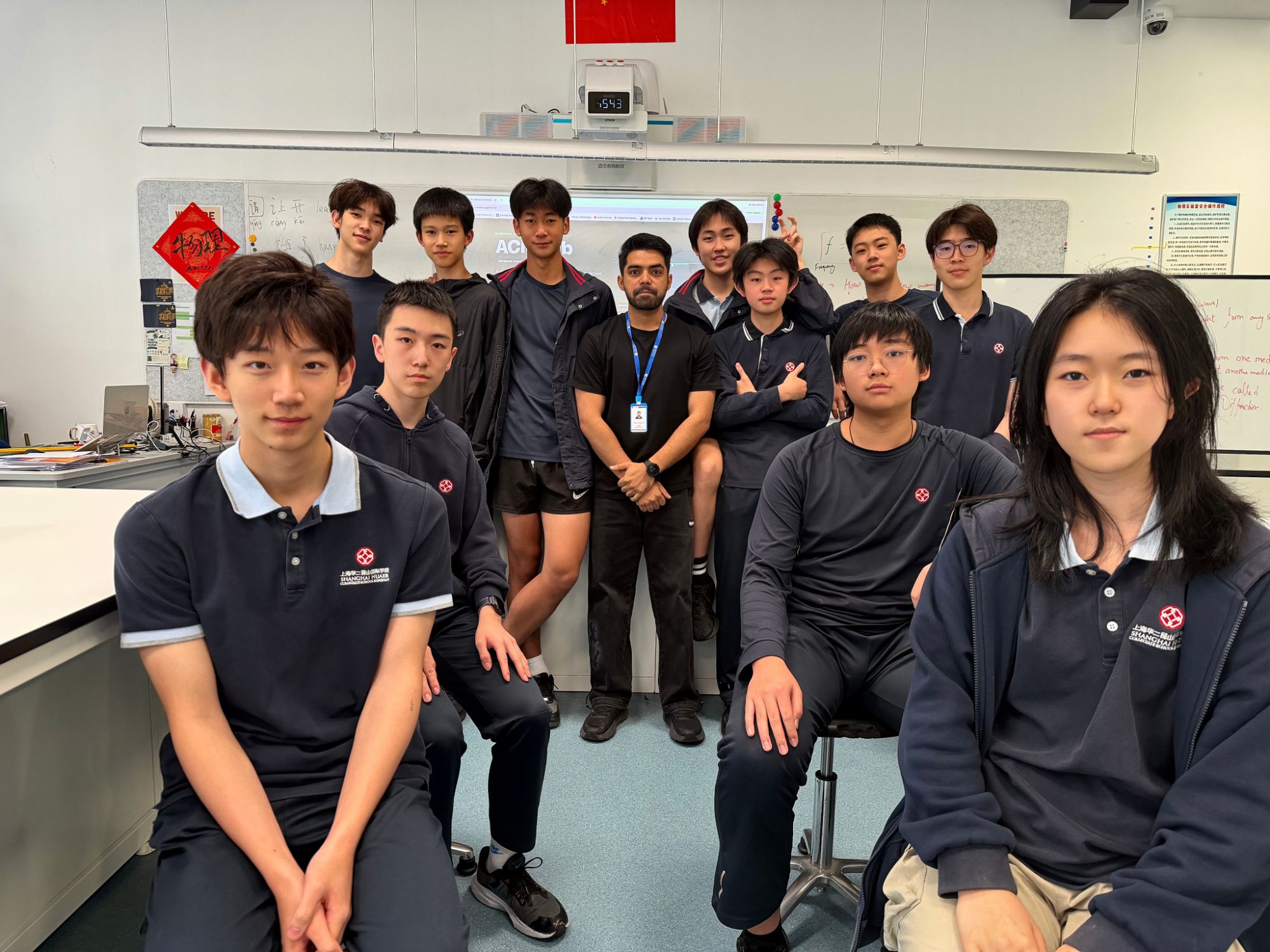
ACM-Lab full research team

ACM-Lab research team — cross-track members behind both the structural and filtration programmes

Experimental Control Matrix

Each stage is supported by controlled groups, defined variables, and comparable outputs.

Track A · Structural

Bridge Programme

A1Uniform latticeNo coatingLoad testBaseline strength
A2Uniform latticeChitosan coatingLoad testCoating effect
A3Gradient latticeNo coatingLoad testGeometry effect
A4Gradient latticeChitosan coatingLoad testCombined group
Track B · Environmental

Filtration Programme

B1Base adsorbentSimple cartridgeFiltration testBaseline adsorption
B2Composite adsorbentSimple cartridgeFiltration testMaterial effect
B3Composite adsorbentGyroid cartridgeFlow testGeometry effect
B4Composite adsorbentFull systemFull system testCombined group

Planned Measurements

Four metric categories evaluated across both tracks — all measurements are planned or under evaluation.

Track A · Structural

Load-Bearing Evidence

  • Maximum load at failure
  • Deflection at failure point
  • Strength-to-weight ratio
  • Failure mode — node vs. member
  • Failure location mapping
Measurement pending
Coating Sub-track

Coating & Composite Behaviour

  • Coating mass gain per layer
  • Surface stability and adhesion
  • Cracking pattern observation
  • Uniformity across specimens
  • Water uptake if applicable
Protocol under evaluation
Track B · Environmental

Adsorption & Flow

  • Absorbance at 664 nm (MB dye)
  • Flow rate through cartridge
  • Contact time per cycle
  • Reuse cycle stability
  • Bead structural integrity
Planned measurement
Engineering Assessment

Prototype Feasibility

  • Material cost per specimen
  • Fabrication time
  • Cost-performance balance
  • Prototype structural stability
  • Cross-track comparison
Planned measurement

Research Workflow

Each experiment follows a structured sequence from initial planning to published findings.

01PlanResearch question, variables, controls
02DesignCAD geometry, specimen setup
03Fabricate3D printing, quality log
04Coat / FormulateChitosan, composite prep
05TestLoad, flow, adsorption
06Record FailureFailure mode, photos, notes
07ReviseGeometry or protocol adjustment
08PublishReport, portfolio, poster

Documentation

Failure Log

A structured record of what did not work as expected, why we believe it happened, and what we changed in response. Each entry documents an observation from ongoing experiment cycles.

15 cases logged
9 protocol updated
6 under evaluation
"A failure that is documented and understood is more valuable than a result that cannot be explained."
O — Observe C — Characterise A — Adjust N — Next test
F-01 Phase A Material Protocol Updated

Chitosan viscosity inconsistency across batches

Observation
Solution batches showed different flow rates and gel consistency under identical nominal preparation conditions.
Likely cause
Uncontrolled ambient temperature and variable mixing duration affecting chitosan hydration kinetics.
Variable isolated
Preparation water temperature; mixing time.
Adjustment made
Standardised water temperature to 50 °C ± 2 °C; fixed mixing time to 15 min per batch.
Next test
Compare gel consistency across 3 replicate batches under controlled conditions. Measurement pending.
Chitosan solution preparation

Lab photo — chitosan batch preparation

F-02 Phase A Coating Protocol Updated

Uneven coating distribution on flat substrate

Observation
Dried coating showed visible streaks and uneven thickness when applied with brush method.
Likely cause
Surface tension differences at contact angle; inconsistent brush application speed.
Variable isolated
Application method; substrate surface preparation.
Adjustment made
Shifted to dip-coating method for flat substrates to improve uniformity.
Next test
Measure coating uniformity under optical inspection after dip-coat protocol. Measurement pending.
Coating application process

Lab photo — coating application test

F-03 Phase A Coating Protocol Updated

Sample warping during air drying

Observation
Coated samples exhibited lateral warping and surface wrinkling after air drying at room temperature.
Likely cause
Uneven evaporation rate; stress differential between coated and uncoated faces.
Variable isolated
Drying temperature; physical constraint method during drying.
Adjustment made
Constrained samples in flat fixture during drying; tested 30 °C forced-air drying to reduce differential evaporation.
Next test
Measure flatness deviation across 5 samples with and without fixture constraint. Measurement pending.
Coating drying process

Lab photo — drying test setup

F-04 Phase B Structural Under Evaluation

Node stress concentration fractures in printed bridge

Observation
Printed bridge models failed at truss nodes rather than span midpoints when load was applied.
Likely cause
Stress concentration at sharp node geometry; print layer orientation perpendicular to applied load.
Variable isolated
Node fillet radius; print layer orientation.
Adjustment made
Added 0.5 mm fillet radius to node connections in CAD model revision.
Next test
Reprint with filleted nodes; apply identical load; compare failure location and load magnitude. Risk under evaluation.
Bridge prototype with node fracture

Lab photo — bridge prototype nodes

F-05 Phase B Testing Under Evaluation

Load test repeatability variance across runs

Observation
Repeated load tests on structurally identical samples produced noticeable variance in measured load-at-failure across runs.
Likely cause
Inconsistent sample placement in test jig; manual load application without controlled rate.
Variable isolated
Test jig alignment method; load application rate.
Adjustment made
Fabricated fixed-position test jig with alignment guides; shifted to constant-rate loading procedure.
Next test
Run 5 replicate tests under revised jig; compare variance to baseline runs. Risk under evaluation.
Bridge test assembly setup

Lab photo — test jig assembly

F-06 Phase A Fabrication Protocol Updated

Print tolerance mismatch during lattice bridge assembly

Observation
Some 3D-printed lattice bridge parts did not align perfectly during assembly, even though the CAD geometry appeared correct.
Likely cause
Small deviations from printer tolerance, nozzle path, layer height, material shrinkage, and slicing settings may have accumulated across multiple lattice members.
Variable isolated
CAD clearance, printer tolerance, layer height, wall thickness, and joint fit allowance.
Adjustment made
Added a tolerance-check step before assembly and recorded whether each printed part required sanding, trimming, or repositioning. Future CAD revisions will include small clearance allowances at connection regions.
Next test
Print a small tolerance test piece with multiple clearance gaps and compare which clearance gives the most reliable fit before printing full bridge variants. Measurement pending.
Metadata
Sample: PRINT-TOL-01 · Method: CAD-to-print inspection · Status: protocol updated
Note
Fabrication tolerance can affect bridge assembly before load testing begins.
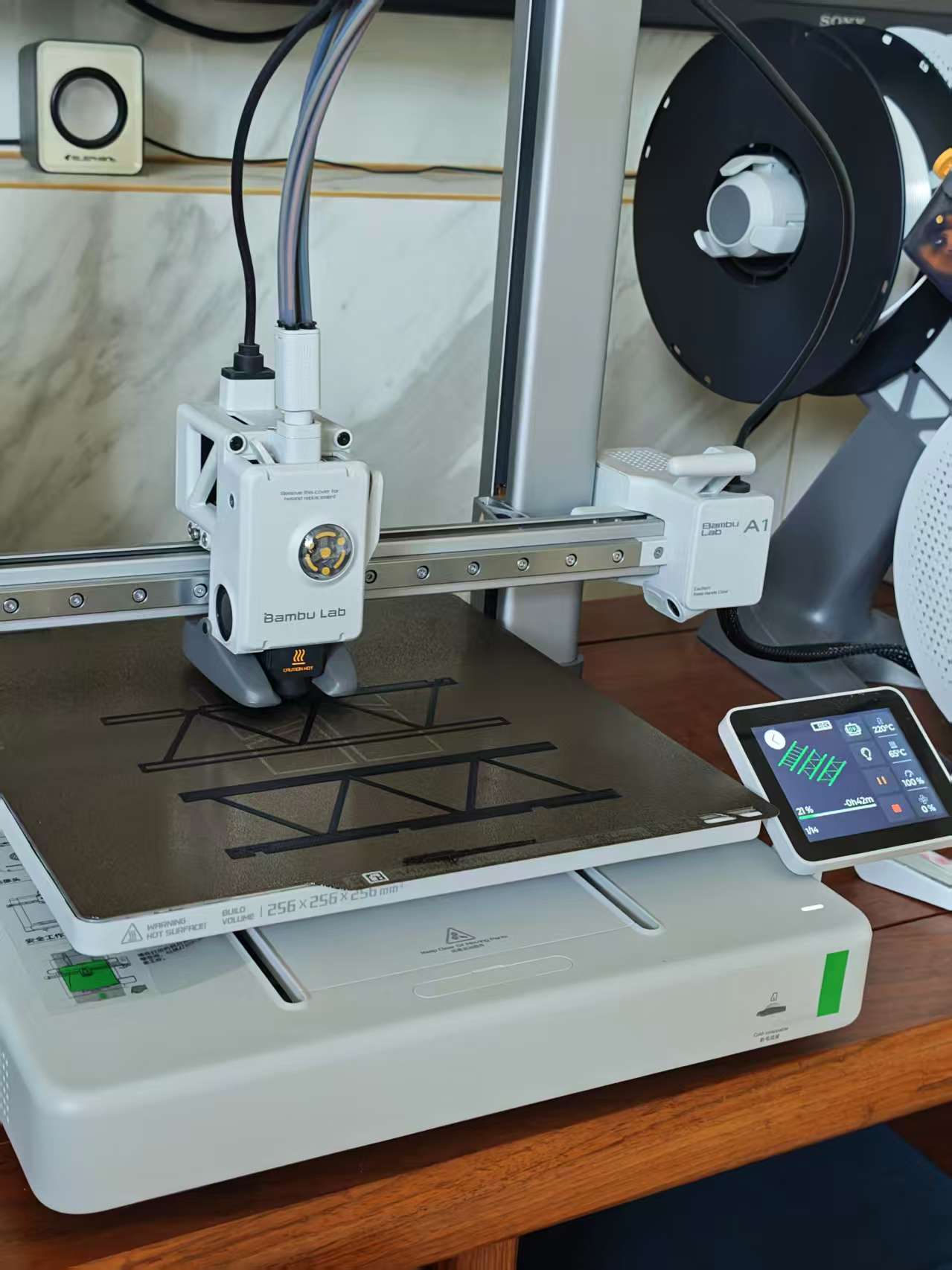
Bambu Lab 3D printer printing lattice bridge structure

Printed lattice members showing assembly tolerance issue.

F-07 Phase A Fabrication Under Evaluation

Surface roughness inconsistency on printed PLA members

Observation
Some printed PLA lattice members showed rough edges, minor stringing, or inconsistent surface finish.
Likely cause
Print temperature, retraction settings, print speed, cooling rate, or filament condition may have affected surface quality.
Variable isolated
Nozzle temperature, print speed, cooling fan setting, retraction distance, and filament condition.
Adjustment made
Recorded print settings for each specimen batch and separated rough-surface samples from smoother samples during visual inspection.
Next test
Print short PLA test bars under adjusted print settings and compare surface finish before using them for coating trials. Risk under evaluation.
Metadata
Sample: PRINT-Q02 · Method: visual print inspection · Status: under evaluation
Note
Print quality affects later coating uniformity and adhesion behaviour.
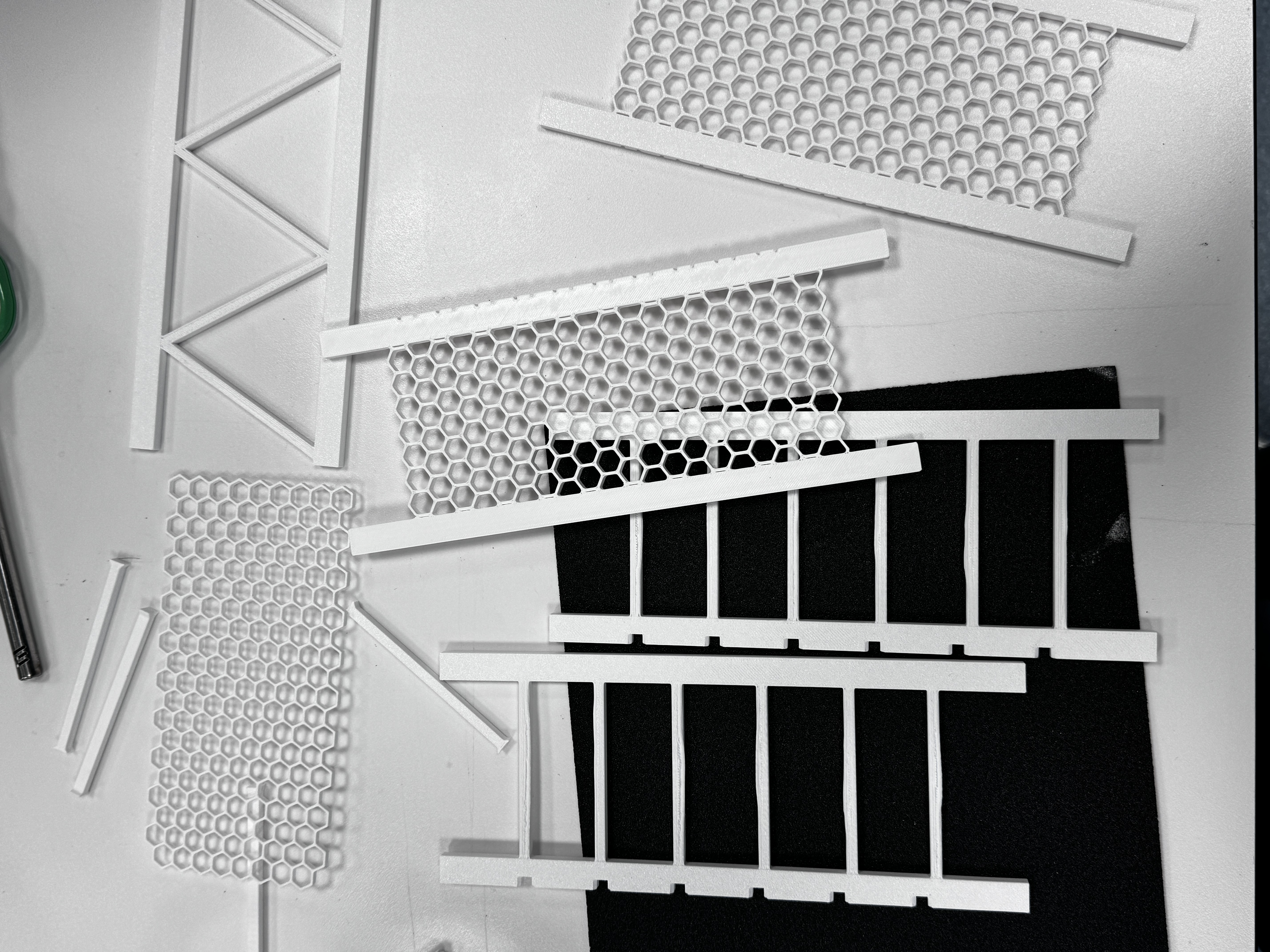
Multiple 3D-printed lattice bridge components laid out showing surface variation

Surface roughness and stringing observed on printed PLA lattice members.

F-08 Phase A Assembly Protocol Updated

Bridge alignment inconsistency before load testing

Observation
During bridge assembly, some members or joints did not sit in exactly the same alignment across specimens.
Likely cause
Manual assembly, accumulated print tolerance, slight warping, and inconsistent joint contact may have affected the final geometry.
Variable isolated
Assembly order, joint orientation, bridge centering, and connection fit.
Adjustment made
Added an assembly checklist and required photos of each bridge before testing. Marked joint orientation and support direction before placing the bridge into the test setup.
Next test
Assemble two bridges using the same checklist and compare visual alignment before applying load. Measurement pending.
Metadata
Sample: ASM-B01 · Method: pre-test assembly inspection · Status: protocol updated
Note
Assembly inconsistency must be separated from structural failure before comparing specimens.
Students assembling lattice bridge and checking joint alignment

Bridge assembly alignment condition before structural testing.

F-09 Phase B Coating Under Evaluation

Coating accessibility issue inside lattice openings

Observation
Chitosan coating did not appear to reach all inner surfaces of the lattice structure evenly.
Likely cause
Complex lattice geometry limited brush access and caused uneven liquid movement during coating.
Variable isolated
Lattice opening size, coating method, coating viscosity, dipping time, brushing angle, and drainage direction.
Adjustment made
Separated coating trials into flat bars, simple lattice samples, and full bridge samples so that geometry effects can be identified before full structural comparison.
Next test
Apply the same chitosan formulation to flat PLA bars and lattice samples, then compare coating coverage by visual inspection. Risk under evaluation.
Metadata
Sample: COAT-LAT-02 · Method: lattice coating trial · Status: under evaluation
Note
Coating inconsistency may come from material formulation or lattice geometry; trials must separate these variables.
Gloved hand dipping lattice sample into chitosan coating tray

Uneven coating access inside lattice openings.

F-10 Phase B Coating Protocol Updated

Local coating accumulation near lattice joints

Observation
Some coating material accumulated near nodes, corners, and lattice intersections instead of forming an even thin layer.
Likely cause
Surface tension, local drainage resistance, excessive coating volume, and joint geometry may have caused coating buildup.
Variable isolated
Coating viscosity, dipping time, drying angle, number of layers, and joint geometry.
Adjustment made
Shifted toward repeated thinner coating layers and required the drying orientation to be recorded for every coated specimen.
Next test
Compare one thicker coating layer with multiple thinner layers on identical PLA samples. Measurement pending.
Metadata
Sample: COAT-J03 · Method: joint coating observation · Status: protocol updated
Note
Coating thickness must be controlled around complex geometry before mass-gain data can be compared across specimens.
Chitosan coating solution in flask used for lattice bridge specimens

Coating accumulation around lattice joints and corners.

F-11 Phase B Coating Under Evaluation

Layer-to-layer coating mass variation

Observation
Mass gain after coating layers did not appear equally consistent across all specimens.
Likely cause
Different liquid retention, drainage time, surface area exposure, and coating thickness may have caused uneven mass increase.
Variable isolated
Layer count, drainage time, sample surface area, coating duration, and drying interval.
Adjustment made
Required mass measurement before coating and after each layer, with the same drainage time before weighing.
Next test
Apply 1, 2, and 3 coating layers to matched specimens and compare mass gain consistency across repeated samples. Risk under evaluation.
Metadata
Sample: MASS-C01 · Method: coating mass-gain log · Status: under evaluation
Note
Mass change per layer must be consistent before coating protocol can be applied to structural comparison specimens.
Students measuring specimen mass after coating layer using balance

Coated specimens prepared for layer-by-layer mass measurement.

F-12 Phase B Drying Protocol Updated

Non-uniform drying between coated surfaces

Observation
Coated samples did not dry uniformly across all surfaces, especially around thicker coating regions.
Likely cause
Uneven coating thickness, drying angle, air exposure, and local solution accumulation may have affected evaporation.
Variable isolated
Drying time, drying position, coating layer thickness, ambient temperature, and drying interval.
Adjustment made
Recorded drying start time, drying position, and surface condition after each layer. Samples now dry under the same orientation before comparison.
Next test
Dry identical coated samples under the same orientation and compare surface condition at fixed time intervals. Measurement pending.
Metadata
Sample: DRY-C01 · Method: drying observation · Status: protocol updated
Note
Drying conditions affect coating repeatability; standardised position must be established before comparing specimens.
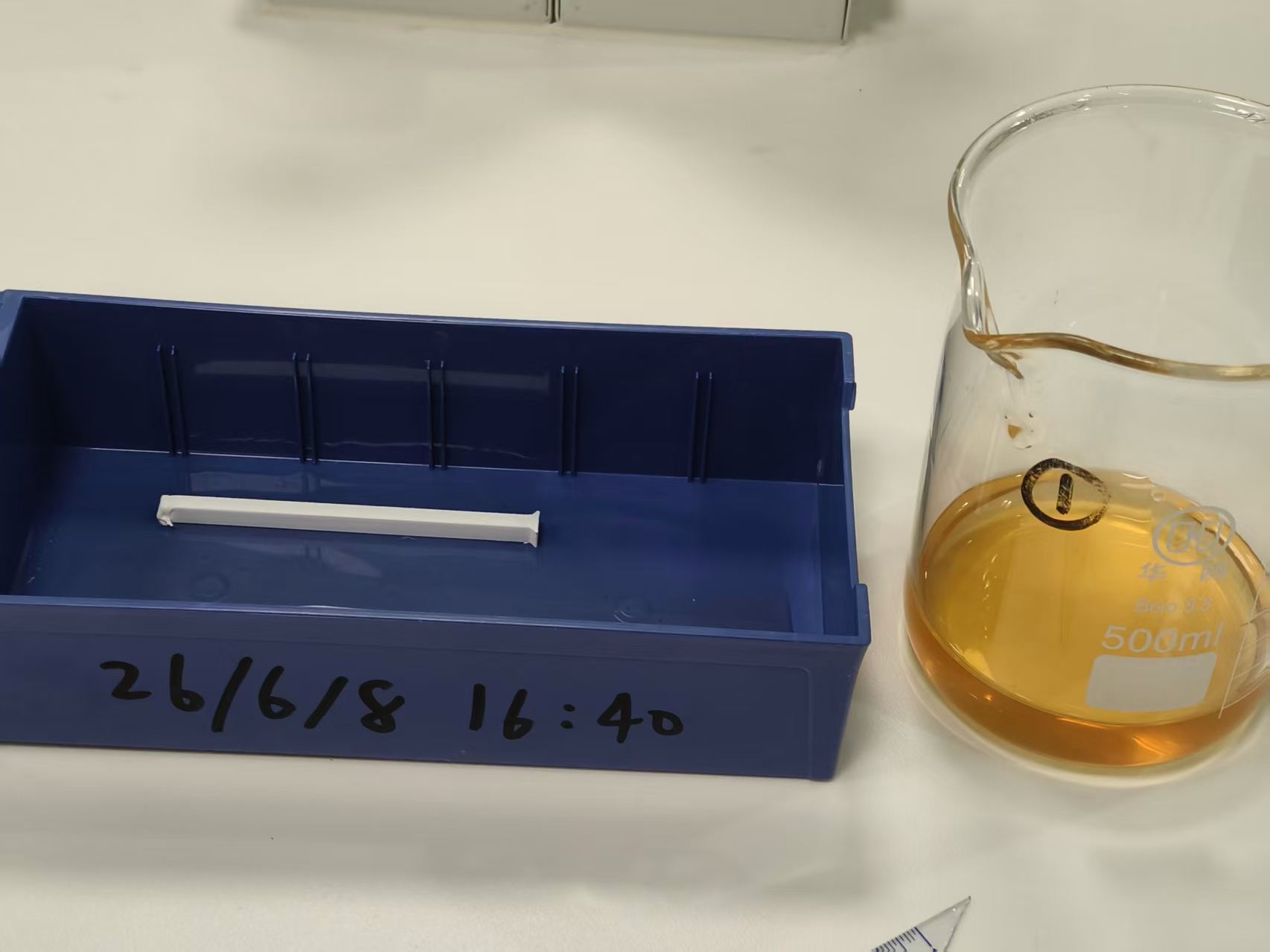
PLA specimen in coating tray beside chitosan beaker, dated drying record

Surface condition after drying under the current coating protocol.

F-13 Phase B Testing Under Evaluation

Load point placement uncertainty during early structural testing

Observation
Early load testing setup showed risk of inconsistent loading position between specimens.
Likely cause
Manual placement, bridge centering error, support position difference, and camera angle variation may have affected repeatability.
Variable isolated
Loading point, support spacing, bridge orientation, camera position, and loading rate.
Adjustment made
Marked a fixed loading point and support position before each trial. Setup photos are now taken before applying load.
Next test
Repeat loading on matched bridge samples using the same support spacing and marked loading point. Risk under evaluation.
Metadata
Sample: LOAD-S02 · Method: compressive load setup check · Status: under evaluation
Note
Measurement uncertainty in setup must be identified before coated and uncoated bridge performance can be compared.
Team gathered around experimental setup reviewing load-test configuration

Early load-test setup showing loading position and support alignment.

F-14 Phase B Documentation Protocol Updated

Failure location not consistently marked after testing

Observation
Some early structural observations did not clearly distinguish whether failure started at nodes, members, supports, or coating regions.
Likely cause
Failure state photos were not always taken from the same angle, and fracture regions were not immediately marked after testing.
Variable isolated
Photo angle, failure-region marking, post-test handling, and documentation format.
Adjustment made
Added a post-test photo protocol: mark the first visible failure region, photograph top and side views, and record whether failure is node-based or member-based.
Next test
Use the same failure documentation format for all bridge specimens in the next testing cycle. Measurement pending.
Metadata
Sample: FAIL-MAP-01 · Method: failure mode documentation · Status: protocol updated
Note
Failure classification by node versus member geometry must be consistent across specimens before any structural comparison is made.
Mentor reviewing protocol documentation with student at lab bench

Bridge specimen after testing with failure region to be marked.

F-15 Documentation Data Logging Protocol Updated

Sample identity and evidence records not fully linked

Observation
Some early notes, photos, sample names, and preparation conditions were not linked in one consistent format.
Likely cause
Sample ID, coating batch ID, photo file name, print setting, and test note format were recorded separately without a shared naming convention.
Variable isolated
Sample naming, batch labelling, photo naming, post format, and data summary fields.
Adjustment made
Created a unified record format: Sample ID, phase, method, variables, evidence photo, observation, adjustment, and next test.
Next test
Apply the same naming format to all future bridge, coating, load-test, and adsorption protocol records. Measurement pending.
Metadata
Sample: LOG-01 · Method: research documentation review · Status: protocol updated
Note
Traceable documentation is necessary before any performance claims can be linked to specific samples or conditions.
Students carefully preparing solution with filter paper, showing step-by-step protocol

Early documentation showing incomplete linkage between sample condition and photo evidence.

Root Cause Analysis — Summary

Each row maps to one logged case. Root cause categories help identify patterns across failures.

ID Title Root cause category Phase Status
F-01 Chitosan viscosity inconsistency Process control — temperature, time A Protocol Updated
F-02 Uneven coating distribution Application method — surface tension A Protocol Updated
F-03 Sample warping during drying Residual stress — differential evaporation A Protocol Updated
F-04 Node stress concentration fractures Geometry — stress concentration factor B Under Evaluation
F-05 Load test repeatability variance Measurement — jig alignment, load rate B Under Evaluation
F-06 Print tolerance mismatch during lattice assembly Fabrication — printer tolerance, shrinkage, clearance A Protocol Updated
F-07 Surface roughness inconsistency on PLA members Fabrication — print temperature, speed, retraction A Under Evaluation
F-08 Bridge alignment inconsistency before load testing Assembly — accumulated tolerance, warping, joint contact A Protocol Updated
F-09 Coating accessibility issue inside lattice openings Geometry — lattice opening size, viscosity, drainage B Under Evaluation
F-10 Local coating accumulation near lattice joints Application — surface tension, drainage resistance B Protocol Updated
F-11 Layer-to-layer coating mass variation Process — drainage time, surface area, layer count B Under Evaluation
F-12 Non-uniform drying between coated surfaces Drying — thickness, orientation, ambient conditions B Protocol Updated
F-13 Load point placement uncertainty Measurement — loading position, support spacing B Under Evaluation
F-14 Failure location not consistently marked after testing Documentation — photo angle, marking protocol B Protocol Updated
F-15 Sample identity and evidence records not fully linked Data logging — naming convention, record format B Protocol Updated

How ACM-Lab responds to failure

01 Observe

Record the unexpected result precisely — what was expected vs what happened.

02 Hypothesise

Identify the most probable variable responsible, without claiming certainty.

03 Isolate

Change one variable at a time in the next experiment to test the hypothesis.

04 Revise

Update the protocol or design based on what the isolated test showed.

05 Retest

Run the revised protocol and document whether the failure mode is resolved.

This log separates actual observations from planned tests. Entries marked Planned check, Next iteration, or Risk under evaluation have not yet been tested. No performance claims, dye removal rates, filtration efficiencies, or strength improvements are stated here unless directly supported by a documented experiment entry.

Benchmark

Research Commons

Share Your Research

Post experiment reports, protocol notes, failure records, and progress updates. Your post appears in Research Commons for the whole team to see.

Research Commons

ACM-Lab Research Documentation

Working drafts, protocol notes, experiment updates, failure analyses, and internal documentation from active lab research.

Loading Research Commons…

Community — Personal Timeline

Your personal community feed — photos, notes, and updates visible to your friends

Community is a personal contribution timeline connected to the main ACM-Lab feed. Post photos, short updates, and lab snapshots here. Friends can view and comment on your community updates.

Lab Photos

Post photos from today's printing session, coating experiment, or lab setup. Add a short caption.

Quick Notes

Record an observation or measurement that isn't ready for a full Community post yet.

Friend Updates

See what your connected ACM-Lab friends have been posting to their personal timelines.

Community

Choose your timeline or open a friend's community contributions.

ACM-X Materials Lab

Composite Adsorbent Design & Filtration Performance Simulator

A parameter-driven simulation environment for sustainable composite adsorbents, microplastic capture, and 3D-printed filtration systems.

This module models how material composition, lattice density, coating thickness, and operating conditions interact to determine filtration efficiency, pressure drop, and structural durability — bridging virtual design with physical ACM-Lab prototypes.

Composite Adsorbents Microplastic Capture 3D-Printed Filters Adsorption Kinetics Flow Simulation
FILTER CROSS-SECTION lattice · coating · adsorbent · flow
PLA Lattice
Chitosan Coating
Composite Adsorbent Core
Chitosan Coating
PLA Lattice
Contaminant particles Clean outflow Adsorption sites
01

Material Selection

Choose adsorbents — chitosan, biochar, activated carbon, or hybrid matrices — ranked by removal capacity and environmental footprint.

02

3D Lattice Design

Set pore diameter, mesh density, layer count, and channel geometry to balance hydraulic resistance against adsorption contact time.

03

Filtration Simulation

Visualise microplastic transport, adsorption kinetics, pressure drop, and breakthrough risk across your full parameter space.

04

Optimise & Validate

Balance capture efficiency, pressure drop, structural integrity, and sustainability — then upload ACM-Lab experimental data to close the loop.

Filtration Performance Dashboard

Run a Design Trial to populate metrics
Adsorption Efficiency
Pressure Drop
Clean Water Output
Reusability Score
Cost per Filter
Overall Design Score

Filtration Design Canvas

Particle transport, adsorption kinetics, pressure drop, and structural risk

Research Workflow

Select materials → Configure structure → Run simulation

Build a composite material genome, run the adsorption-filtration model, and record evidence that can directly support ACM-Lab physical experiments.

3D Structure Parameters

Pore geometry, mesh density, and operating conditions

Focus on manufacturable settings: pore diameter, mesh density, layer count, pressure, pH, and reuse cycles.

Digital Twin Control System

Digital Twin Filtration Physics Lab

Simulate flow velocity, particle capture, adsorption efficiency, pressure drop, and cost-performance tradeoffs inside a 3D-printed composite filter.

sustainable composite adsorption material 3D printed filtration system water purification particle transport
Compare Trials
Contaminated inflow Porous composite layer Clean outflow

Why this tool exists

Digital Twin Lab simulates the real ACM-Lab filtration prototype

ACM-Lab Research Block D involves building a 3D-printed composite filter and testing it with real contaminated water. This digital twin runs the same physics — particle transport, adsorption kinetics, pressure drop, and fouling — so you can predict what will happen before the physical prototype is built. Use it to explore how changing flow velocity, porosity, or material model affects removal efficiency.

  1. Set experiment conditions using the sliders on the left — flow velocity, particle concentration, filter thickness, porosity, surface charge, pH, and reuse cycles.
  2. Choose a material model from the dropdown — each preset represents a different real composite type ACM-Lab is testing.
  3. Click "Run Experiment" to start the live particle simulation. Orange particles are contaminants; green dots are captured particles.
  4. Read the metrics panel on the right — removal efficiency, pressure drop, and flow rate update in real time.
  5. Save and compare trials — log different parameter sets in the Trial Notebook, then compare them in the Compare Trials section below.
  6. Export CSV to bring your simulated data into a spreadsheet and compare it against real ACM-Lab measurements.

Section 2

Experiment Control Console

Section 3

Live Digital Twin Simulation

standby
Orange particles = contaminants Green dots = captured particles Cyan lines = water flow Amber glow = high pressure zone

Section 5

Scientific Graph Analysis

This graph set helps identify the tradeoff between removal efficiency and hydraulic resistance.

Section 6

Trial Notebook

Section 7

Research Interpretation

Section 8

Compare Trials

Select 2-3 saved trials in the notebook to compare engineering performance.

Bridge Constructor Lab

Functional-Gradient Bridge Studio

Design a 3D-printed lattice bridge, tune material placement and chitosan bio-coating, then run a cinematic load-crossing test across the valley.

GoalMax load / low mass MaterialPLA + bio-coating OutputStress + failure map
① Build ② Material ③ Coating ④ Test ⑤ Analyse
LIVE STRUCTURAL TESTBED
Click in the gap to place your first node
Low Normal Warning Critical Esc / right-click → cancel  ·  Drag node → reshape  ·  Triangulate for stability

Composite Genome Project

AI-Assisted Sustainable Composite Materials Intelligence Platform

Mapping sustainable composite materials through data, simulation, and engineering optimisation for 3D-printed filtration systems and functionally graded structural design.

0Materials Indexed
0Structural Simulations
0Filtration Systems
0Max Adsorption %
0Composite Families

Filter Materials

Best Match

Showing 10 materials

Research Intelligence Center

Research Intelligence Center

Prototype data architecture, simulation evidence, and optimization planning for future sustainable composite materials experiments.

ACM-Lab's pre-experimental research intelligence system — mapping independent variables, control conditions, simulation benchmarks, and validation targets before physical testing begins. Rigorous experimental design is the foundation of credible materials science.

Prototype Planning Framework  ·  Simulation-Based Benchmarks  ·  Validation Pending Physical Testing

0Planned Data Fields
0Material Formulations
0Planned Simulations
0Failure Design Scenarios
0Simulated Benchmark %
0Target Load-to-Cost ×

About this platform: This dashboard currently uses prototype and simulation-based values to define ACM-Lab's future experimental data structure. All metrics, benchmarks, and dataset values are planned experimental targets informed by materials science literature — not validated laboratory results from physical testing. Final values will be updated after experiments are completed.

Experimental Variable Planning Matrix

Pre-experimental research design records defining independent variables, dependent variables, control conditions, target benchmarks, and measurement basis for each planned experiment. Organised by project track to demonstrate systematic variable planning before physical testing begins.

Showing 11 records

Research Collaborators

Find lab partners by topic, material specialty, and research contribution

Send a request to another verified ACM-Lab member.

AI Research Communication Hub

Team experiment chat, data sharing, lab AI assistant, and smart research replies

Composite Lab Control Center

Profile, privacy, AI model settings, research identity, and presentation modes

A

Profile

Display names must be unique across all ACM-Lab accounts.

Password Login

After email verification, set a password so you can log in next time with email and password.

Password login is optional and can be updated here.

Birth date and address stay private unless someone is your friend. Community visibility defaults to friends only.

Research Verification System

Verify experiments, researchers, labs, integrity score, and platform credibility

Verified Experiment

Upload video, CSV, SEM images, raw data, and experimental conditions for credibility checks.

Verified Researcher

Shows a badge for reliable contributors, strong research identity, and documented work.

Top Composite Innovator

Future badge for high-quality materials experiments, AI optimization, and public evidence.

Experimental Integrity Score

AI can flag abnormal data, missing controls, weak methods, or unsupported claims.

After certification, a yellow badge appears after your name.